Wool fabric: how it is made, its types, its labels and its carbon footprint
By Ketul Patel • • 9 min read
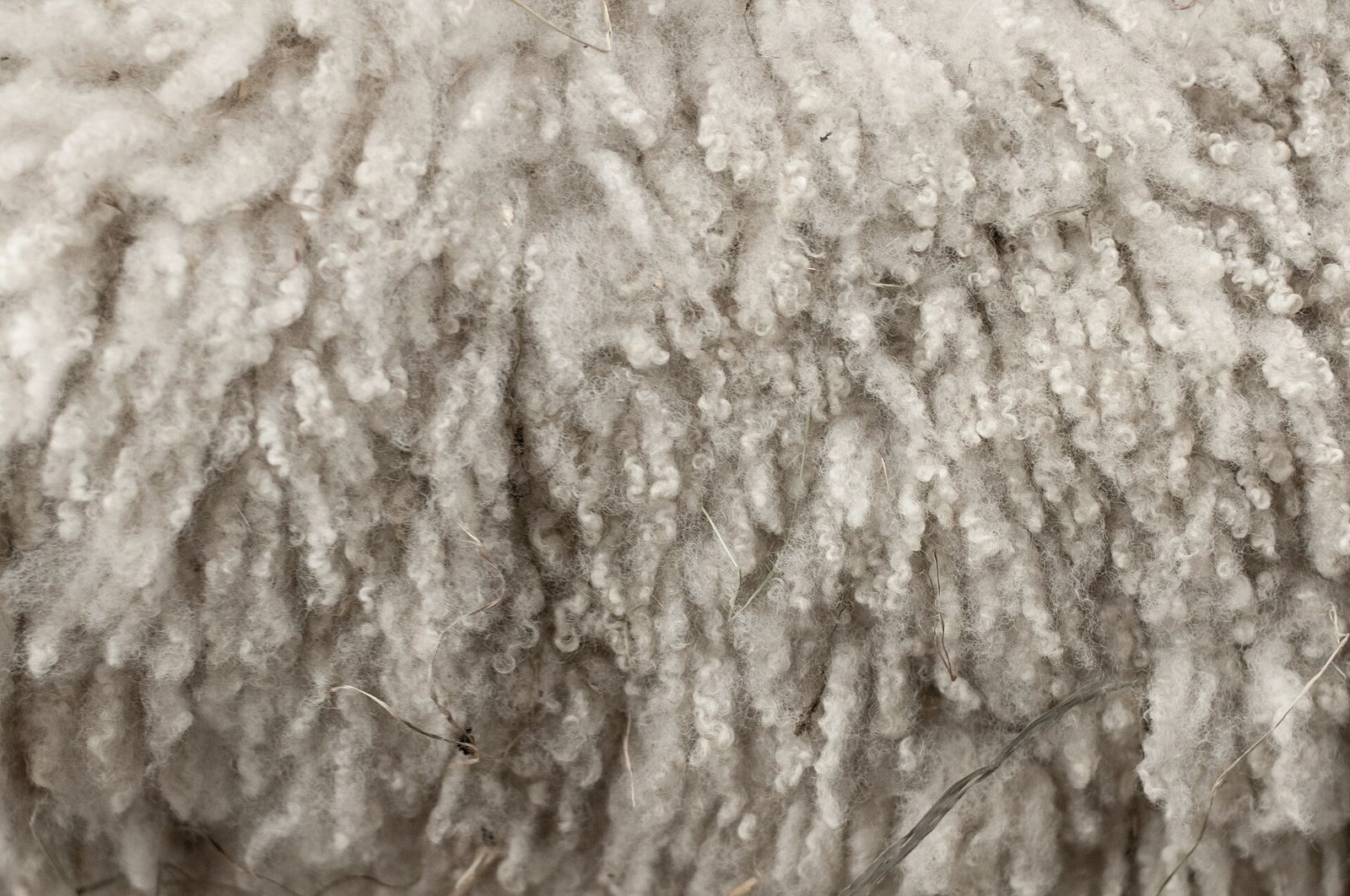
Wool fabric is cloth woven or knitted from the fleece of sheep, used for suits, coats, knitwear, blankets and rugs. This guide explains how fleece becomes fabric, the main types, what the labels mean in the EU and the US, and why the carbon footprint of wool per kg is one of the most disputed numbers in textiles.
What is wool fabric? The short answer
Wool fabric is made from the hair that sheep grow and farmers shear each year. It is a natural animal fibre, made mostly of a protein called keratin, not a plant fibre like cotton or a plastic like polyester.
In the EU, the word wool on a label means fibre from the fleece of sheep or lambs. Regulation (EU) No 1007/2011 lists it first among the fibre names in its Annex I, and treats alpaca, cashmere, mohair and camel as separate names.
Wool is a small fibre by volume. Textile Exchange's Materials Market Report 2026 puts world wool output at about 1.03 million tonnes in 2025, or 0.7% of all fibre made.
About 8% of that wool was recycled fibre, the report says. The rest was new wool from sheep, measured after washing.
How wool fabric is made, from fleece to cloth
Wool fabric starts on the farm as greasy wool. That is the raw fleece, still full of grease, sweat, dirt and plant matter.
Washing removes a large part of that weight. Textile Exchange reports 0.94 million tonnes of clean wool in 2025, equal to 1.78 million tonnes of greasy wool. So about 1.9 kg of raw fleece went into each kilogram of clean fibre on average.
After scouring comes top making, where the fibres are combed into a soft rope. Then come shrink-proofing for machine-washable wool, dyeing, spinning, knitting or weaving, and finishing.
That list of steps is the one used in a 2020 wool study in The International Journal of Life Cycle Assessment. It also notes that most wool is processed in China and India, with a smaller share in Europe.
That matters for Indian mills. Much of the world's fine wool is grown in Australia, South Africa, New Zealand and South America, then shipped greasy to be scoured and spun in Asia.
- ShearingGreasy wool comes off the sheep
- ScouringWashing removes grease, dirt and plant matter
- Top makingFibres carded and combed into tops
- Dyeing and spinningTop or yarn is dyed, then spun
- FabricKnitted or woven, then finished
Types of wool fabric
Most woven wool fabric falls into two families: worsted and woollen. The difference is in how the yarn is made, not in the sheep.
Worsted yarn is spun from long fibres that have been combed straight. The result is smooth, firm cloth such as suiting, gabardine and crepe.
Woollen yarn is spun from shorter, carded fibres that stay crossed and fuzzy. It makes softer, bulkier cloth such as tweed, flannel and many blankets.
Knitted wool is a third group. Jersey, rib and interlock knits are used for sweaters, base layers and socks, often in fine Merino wool.
Felted and boiled wool are made by shrinking wool with heat, water and friction until the fibres lock together. That gives a dense cloth that does not fray.
What wool labels mean in the EU and the US
Wool labels are tightly regulated in both markets. This is general information, not legal advice; check the current rules for each product.
In the EU, the words fleece wool or virgin wool are allowed only for wool that was never part of a finished product before. Article 8 of Regulation 1007/2011 also bars wool that was spun or felted more than the product needs, or damaged by treatment or use.
Every fibre must be listed by weight, from largest to smallest share. Article 9 sets that rule, with limited room to group very small shares.
In the US, the FTC's rules under the Wool Products Labeling Act say the words virgin or new may not describe wool that was ever reclaimed from a made product. They also tie the Super numbers on fine suiting to fibre diameter.
A cloth sold as Super 100's must average 18.75 microns or finer, for example. Cashmere must average no more than 19 microns, under section 300.19.
Wool fabric carbon footprint per kg
Our calculator uses 25 kg CO₂e per kg for conventional wool fibre and 20 kg for Merino wool. Both are stand-in values, and both are marked “Disputed” on the wool material page and the Merino wool page.
We mark them that way on purpose. Published studies give wide ranges, and we have not found one that states a single per-kg figure for clean, scoured wool that we can trace to its source.
The spread is large. A 2024 study of 20,000 sheep in Victoria, Australia, published in the AATCC Journal of Research, found 14.2 to 52.9 kg CO₂e per kg of wool at the farm gate.
Most of that comes from the sheep themselves. The same study found that methane from rumination and emissions from excretion were the largest sources, ahead of fertiliser and electricity.
Compare factors per kg with care. The chart mixes farm-gate wool with fibre-gate factors for other fibres, so it shows scale, not a like-for-like ranking. Our emission factors guide explains how to read boundaries.
Why wool's footprint depends on allocation
A sheep gives more than wool. It also gives meat, and sometimes milk, so a study must decide how to split the farm's emissions between them. That split is called allocation.
The choice moves the answer a lot. The Victoria study tested three methods and found that economic allocation, by sale value, gave wool the highest footprint, while allocation by mass gave the lowest.
The 2020 sweater study chose a third route. It split farm emissions between wool and live weight by protein mass, and it says it avoided economic allocation because ISO ranks it lower.
A second split happens at the scouring plant. Washing separates wool grease, a saleable co-product, and the 2020 study split that step between wool and grease by mass.
So two honest studies can disagree by a factor of three without either being wrong. Our guide to allocating factory energy to products explains the same idea inside a factory.
Wear life: why the use phase matters for wool
For a wool garment, how long it is worn can matter more than any factory step. The 2020 study found that the number of wears and the garment's lifetime were the most influential factors in its results.
Its subject was a light Merino sweater with 300 g of wool. The study counted 109 wears in total, including reuse by a second owner, and about 0.2 washes per wear.
Each wear came to 0.17 kg CO₂e. Over 109 wears that is about 18.5 kg for the sweater's whole life, by our multiplication.
If the sweater were thrown away after one season of 15 wears, impacts per wear would rise 5.8 to 6.8 times, the authors found. The farm and factory emissions are simply spread over fewer uses.
A product carbon footprint for a buyer is usually cradle to gate, so the use phase sits outside it. Our cradle to gate vs cradle to grave guide explains when each boundary applies.
Worked example: the fibre in a wool sweater
Take a sweater with 300 g of wool in it, the same weight as the study garment. Suppose 10% of the wool bought is lost in spinning and knitting, so you buy 0.33 kg. The loss rate is our example.
With our stand-in factor, the fibre line is 0.33 kg × 25 kg CO₂e/kg = 8.25 kg CO₂e. That is fibre only, before your own dyeing, knitting and finishing energy.
Now test the range. At the Victoria study's low and high ends, the same 0.33 kg gives about 4.7 and 17.5 kg CO₂e. Those results are per kg of greasy wool, and each kilogram of clean fibre needs more than a kilogram of fleece, so the real range for clean fibre sits higher.
This is why a buyer should see the factor and its status next to the result. A wool footprint with no stated source or allocation method cannot be checked.
The fabric weight matters as much as the factor. A 400 g sweater carries a third more fibre emissions than a 300 g one at the same factor, so record the actual weight per size.
What buyers check when you sell wool fabric
Buyers want to know where the wool came from. The farm region, the breed and the farm programme can all change the footprint and the answers on animal welfare.
Farm programmes cover a small share of wool. Textile Exchange reports that 79,135 tonnes of greasy wool came under the Responsible Wool Standard in 2025, about 4.5% of world greasy wool.
Expect questions on mulesing too. Textile Exchange's report breaks down Australian wool sold in 2025 by mulesing status, including a share where the status was not declared, so ask your top maker what was declared for your lots.
Common mistakes are easy to spot. Using one wool factor for every product without its status, leaving out the elastane or nylon in a blend, and calling recycled wool “virgin” are the ones auditors catch.
Do not call wool “natural, so low impact” or “eco-friendly” on its own. Give figures with their sources, as our guide to the EU environmental claims rules explains.
- Name the wool's origin, type and any farm programme
- Keep the top maker's or spinner's invoices with each order
- State the factor you used, its source and its status
- Say which allocation method the factor uses, if known
- List every fibre in the blend by weight, largest first
- Include fibre lost in spinning, knitting and cutting
- Record the finished weight for each size
What to do next
Start with the bill of materials. List the wool weight per product, the yarn count and the spinner for each style.
Then ask your top maker or spinner for its own footprint per kg, with the year and method. A supplier figure replaces our stand-in, and a buyer will trust it more.
Run each style through our product carbon footprint calculator. It adds your factory energy, packaging and transport, and shows which factors are disputed.
If a buyer has asked for numbers, our guide to answering a customer carbon footprint request shows what to send. For plant fibres, see our guide to hemp fabric.
Sources and further reading
Textile Exchange, Materials Market Report 2026: textileexchange.org
Wiedemann et al. (2020), Environmental impacts associated with the production, use, and end-of-life of a woollen garment, Int J LCA 25(8): Springer
Li et al. (2024), Carbon footprint of wool at cradle to farm-gate stage in Victoria, Australia, AATCC Journal of Research 11(1): SAGE
Regulation (EU) No 1007/2011 on textile fibre names: EUR-Lex
US FTC, Rules under the Wool Products Labeling Act, 16 CFR Part 300: eCFR
Our emission factors and their sources: methodology
Questions
What is wool fabric made of?
Wool fabric is made from sheep's fleece, a natural protein fibre. In the EU, the label name wool means fibre from sheep's or lambs' fleeces; cashmere, alpaca and mohair have their own names.
What is the difference between worsted and woollen fabric?
Worsted yarn is spun from long, combed fibres and makes smooth, firm cloth like suiting. Woollen yarn is spun from shorter, carded fibres and makes softer, bulkier cloth like tweed and flannel.
What is the carbon footprint of wool fabric?
It is disputed. A 2024 Australian study found 14.2 to 52.9 kg CO₂e per kg of wool at the farm gate, depending on the allocation method and the sheep's productive life. Our calculator uses a 25 kg stand-in and marks it as disputed.
Why is wool's carbon footprint so high per kg?
Most of it comes from sheep. Methane from digestion and emissions from manure were the largest sources in the Victoria study, ahead of fertiliser and electricity.
What does Super 100's mean on wool fabric?
In the US, it means the wool fibre averages 18.75 microns or finer, under FTC rule 16 CFR 300.20a. Higher numbers require finer fibre.
Can recycled wool be called virgin wool?
No. EU rules allow fleece wool or virgin wool only for wool never used in a finished product, and US rules bar virgin or new for any reclaimed wool.
Is wool fabric better for the climate than polyester?
We do not rank fibres. Per kg, wool's farm-gate results are far above the polyester factor in our library, but a wool garment's lifetime and number of wears can change the result per use a lot.
How much wool is made each year?
Textile Exchange estimates about 1.03 million tonnes of wool fibre in 2025, including about 8% recycled wool. That is 0.7% of all fibre made.
Keep reading
 Basics • MaterialsWhat is modal fabric? How it is made, how it is labelled, and its footprintby Ketul Patel • 14 Nov 2026 • 8 min read
 Basics • DataEmission factors explained: where the numbers come from and how to chooseby Ketul Patel • 12 Nov 2026 • 9 min read
 Methods & standards • MethodAllocation in product carbon footprints: sharing factory energyby Ketul Patel • 12 Nov 2026 • 9 min read
 Basics • BoundariesCradle to gate vs cradle to grave: which boundary does your buyer want?by Ketul Patel • 12 Nov 2026 • 9 min read
 Basics • MaterialsWhat is recycled polyester? rPET, how it is made and what it savesby Ketul Patel • 13 Nov 2026 • 9 min read