Is polyester plastic? Yes. What that means for makers and buyers
By Ketul Patel • • Updated • 9 min read
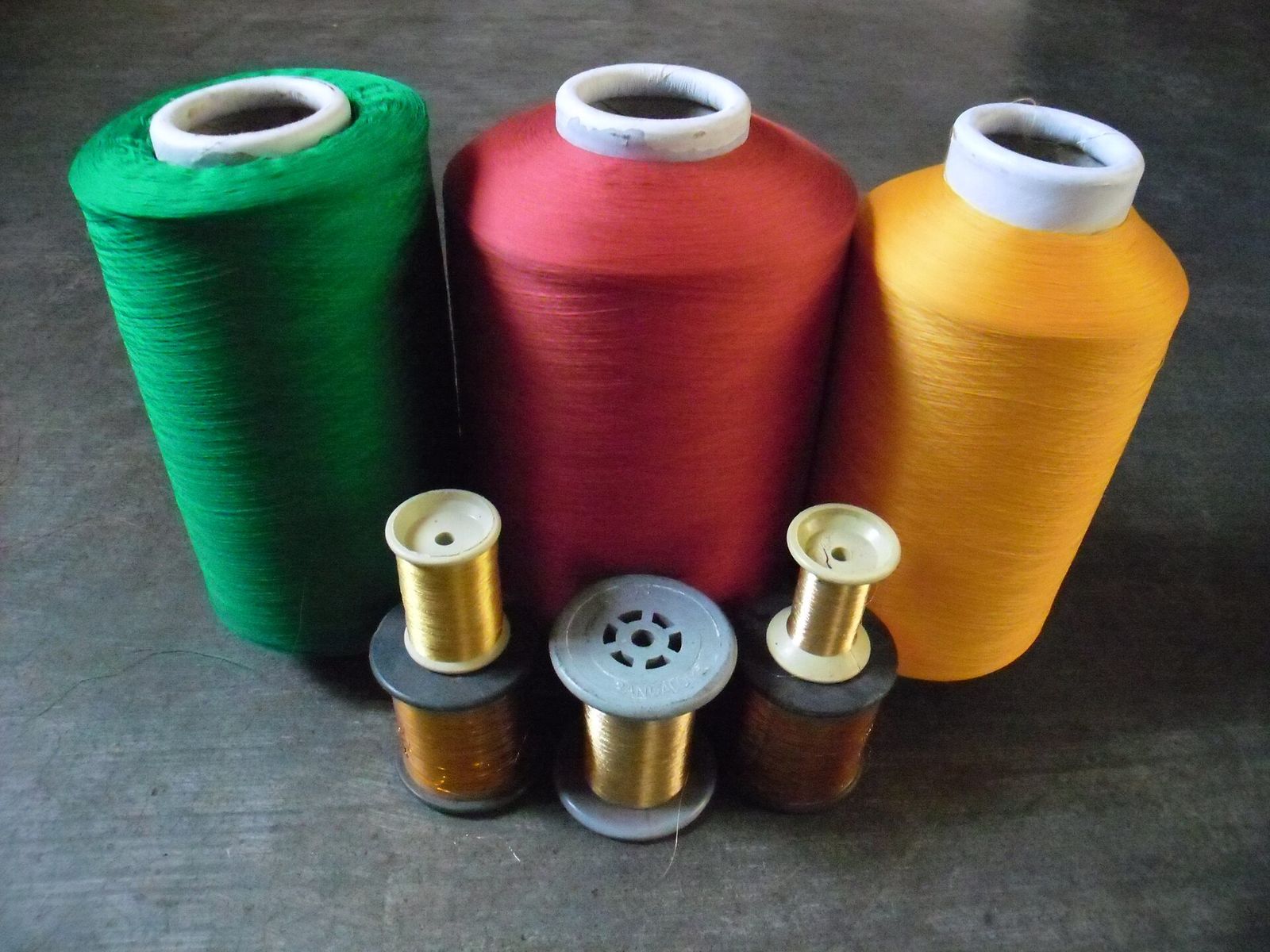
Is polyester plastic? Yes. The polyester in most clothing is polyethylene terephthalate (PET), the same polymer used for drinks bottles, made into fibre. This guide explains how it is made, what it sheds, and what being plastic does and does not mean for a garment's carbon footprint.
Is polyester plastic? The short answer
Yes. Polyester is a synthetic polymer, and the common textile type is PET. A 2021 report by PBL and TNO notes that the trade calls fibre-grade PET polyester, while bottle-grade PET goes into drinks bottles.
It is also the world's most common fibre. Textile Exchange's Materials Market Report 2026 puts polyester at 59% of global fibre production in 2025, or 82.5 million tonnes.
Most of it is made from fossil sources. The 2025 edition found that 88% of polyester was fossil-based in 2024.
In Europe, the European Environment Agency estimates that synthetic fibres such as polyester and nylon make up about 60% of clothing.
Its lead is growing in tonnes. Polyester output rose from 77.7 million tonnes in 2024 to 82.5 million in 2025, while all fibre reached about 139 million tonnes.
What counts as plastic, and why polyester fits
Polyester fits every common definition of plastic. It is a polymer made by chemical synthesis, not grown.
EU law gives a clear test. The Single-Use Plastics Directive defines plastic as a polymer material that can act as a main structural part of a product. Natural polymers that have not been chemically modified are excluded.
Cotton, wool and linen are natural polymers, so they fall outside that definition. Polyester is synthesised from oil-based chemicals, so it falls inside. Bio-based plastics are covered too.
That definition is written for that directive, and other laws may define plastic differently. This is general information, not legal advice.
- Outside the definition: natural polymers that are not chemically modified, such as cotton, wool, linen and silk fibre.
- Inside the definition: synthetic polymers such as polyester (PET), nylon and elastane.
- Also inside: bio-based plastics. PET made partly from plant-based MEG is still PET, and still plastic.
- Still plastic after recycling: recycled polyester is the same PET, so it sits inside too.
Polyester and PET bottles: same polymer, different grade
Polyester fibre and a water bottle are the same polymer in different grades. The difference is the length of the polymer chains.
PBL measures this as intrinsic viscosity (IV). Fibre-grade PET has shorter chains and lower IV; bottle-grade PET has longer chains and higher IV, which makes it more rigid.
Makers control IV by running the polymerisation longer or shorter. That is why recycled bottles can become fibre, but old fibre rarely becomes a bottle.
There is one small recipe difference. PBL notes that about 2% of bottle-grade PET by mass is PIA, a close chemical cousin of PTA.
How polyester is made from oil and gas
Polyester starts as crude oil or natural gas. The PBL report traces the PET chain from crude oil through refining to two building blocks, then to the polymer.
Every step uses energy, and plants differ in fuel and efficiency. The EEA notes that making synthetic fibres needs large amounts of energy.
There are alternatives at the edges. PBL notes that MEG can be made from biomass and is available at scale, while bio-based para-xylene was not yet mature in 2021.
PBL gives one example of the bio route. In 2016, a Dutch plant made 20,000 tonnes of PET that was 27% bio-based by mass, using plant-based MEG.
In plain terms, the chain has five steps:
- Crude oilRefined and steam-cracked
- Ethylene and para-xyleneBase chemicals
- MEG and PTAGlycol and terephthalic acid
- PET polymerEsterified and polymerised
- FibreMade into filament or staple
- Refining and cracking: crude oil is refined and steam-cracked into ethylene and para-xylene.
- Building blocks: ethylene becomes mono-ethylene glycol (MEG); para-xylene becomes purified terephthalic acid (PTA). PBL says the PTA route makes about 98% of PET.
- Polymer: PTA and MEG are joined and polymerised into PET.
- Fibre: fibre-grade PET is made into continuous filament or cut into short staple fibre.
- Yarn and fabric: the fibre is spun, knitted or woven, dyed and finished at a mill.
Does polyester shed microplastics?
Yes. Like other synthetic fabrics, polyester sheds microfibres, especially in the wash. A 2019 study in Scientific Reports by De Falco and colleagues washed real garments in a household machine at 40 degrees C.
It measured 124 to 308 mg of microfibres per kg of washed fabric. That is roughly 640,000 to 1.5 million fibres per kg.
Release from a 100% polyester T-shirt levelled off after four or five washes. A polyester, cotton and modal top was still shedding at the tenth wash.
Washing is not the only route. The EEA notes that synthetic textiles shed microplastics throughout their life, from fibre making to disposal.
At the scale of the oceans, the EEA cites estimates of 200,000 to 500,000 tonnes of textile microplastics reaching the sea each year.
Microfibres are a pollution impact, not a carbon one. A carbon footprint counts greenhouse gases only, so a product can have a modest footprint and still shed. Buyers may ask about both.
- Yarn type: in the study, continuous filament yarns shed less than yarns made from short staple fibres.
- Twist: higher-twist yarns released fewer microfibres.
- Hairiness: yarns with fewer loose fibre ends on the surface released less.
- Blends: in the polyester, cotton and modal top, about 80% of the released fibres were cellulosic, not polyester. Modal is a cellulose fibre spun from wood pulp; see what modal fabric is.
Other plastics hiding in a garment, bag or shoe
Polyester is rarely the only plastic in a product. Nylon, elastane, PU coatings and synthetic rubber soles are plastics too.
Each has its own footprint per kg in our calculator. Multiply by the weight used in your product to see which one matters most.
Small shares still count. Take 0.2 kg of stretch jersey with 5% elastane. The 0.01 kg of elastane at 15.0 gives 0.15 kg CO2e, while the 0.19 kg of polyester at 3.86 gives about 0.73.
So a twentieth of the weight makes up about a sixth of the fibre footprint. Check trims, coatings and sole units the same way.
- Polyester and rPET: 3.86 and 2.21 kg CO2e per kg; see polyester for the source.
- Nylon: 9.10 kg CO2e per kg; see our nylon and polyester comparison.
- Elastane: 15.0 kg CO2e per kg, marked contested; a small share in stretch fabrics still adds up.
- PU coatings: see our guide to what vegan leather is made of.
What being plastic means for a garment's carbon footprint
Being plastic does not, on its own, make a garment's footprint high or low. Per kg of fibre, our calculator uses 3.86 kg CO2e for polyester and 4.17 kg CO2e for conventional cotton (cotton).
Per kg and per product are different questions. A per-kg factor covers making one kilogram of fibre. A product footprint covers every stage, for one item.
A worked example: a shirt with 0.15 kg of polyester has 0.15 x 3.86, or 0.58 kg CO2e, in its fibre. A shirt with 0.18 kg of cotton has 0.18 x 4.17, or 0.75 kg CO2e. Fabric weight moved the result as much as the fibre did.
And fibre is one stage. A T-shirt's whole-life footprint also counts production, packaging, transport, use and end of life.
Use can be a large stage too. In our method it covers washing and drying at home over the garment's life, so a cradle-to-gate figure leaves it out.
Polyester at the end of its life
Most polyester clothing is not recycled into new clothing today. The EEA says recycling of synthetic fibres is not observed at scale, for technical and economic reasons.
Textile Exchange reports that textile-to-textile recycling made up 0.76% of all fibre produced in 2025. Of recycled polyester, 97% came from bottles.
Burning polyester releases fossil carbon. Plant fibres hold biogenic carbon, which a footprint reports separately.
Recycled content does not change this. A recycled polyester garment holds the same fossil carbon in its PET as a virgin one.
That is why the end-of-life stage needs a clear boundary. Our guide to cradle-to-gate vs cradle-to-grave explains what each includes.
For your footprint report, three choices decide how end of life shows up:
- Boundary: a cradle-to-gate figure stops at your factory gate and leaves end of life out.
- Disposal route: landfill, burning and recycling each give a different result, so state which you assumed and why.
- Carbon type: report fossil carbon from polyester and biogenic carbon from plant fibres on separate lines.
What buyers ask makers of polyester products
Buyers rarely stop at "is polyester plastic". They want the weight, the recycled share and a footprint per product, so they can use your data in their own Scope 3 reports.
A product footprint from you can replace a rough average in a brand's report. See our guide on Scope 3 and supplier product footprints for how brands use it.
Claims are the other worry. Before you print a claim about plastic content, read our guide to the EU rules on environmental claims.
- Fibre composition by weight, including elastane and trims
- Recycled share with an RCS or GRS certificate
- Fabric weight in g/m2 and cutting waste
- Mill energy source for spinning, dyeing and finishing
- Wash-test or shedding data, if the buyer asks
- One footprint per product with its boundary
What to do next
If a buyer asks you is polyester plastic, answer yes, then give the numbers that matter. Those are the fibre weight, the recycled share with proof, and a footprint per product.
Start with an estimate, then replace the biggest guesses with your own data. Our methodology page lists every factor we use.
Mill energy is usually the first guess worth replacing. Spinning, dyeing and finishing run on heat and electricity, and production is often the largest stage of a garment's footprint.
Keep the answer in one place. A single data pack per style saves you rewriting the same reply for every buyer.
- 1Map the plasticsList every synthetic fibre, coating and trim by weight
- 2Screen the styleRun a free estimate from a product link
- 3Add mill dataEnergy use and source for each process
- 4Build the footprintOne figure per product with stages shown
- 5Share itSend a PACT data file with the boundary
- Quick check: try our free footprint estimate on one product link.
- Full figure: use the product carbon footprint calculator for a footprint per product.
- Data file: share results as a PACT data file alongside the PDF report.
Sources and further reading
Every figure above was read at these primary sources in November 2026.
- Materials Market Report 2026 and 2025: Textile Exchange
- Tran and West (2021), Decarbonisation options for the Dutch bottle-grade PET industry: PBL and TNO
- Plastic in textiles: towards a circular economy for synthetic textiles in Europe (2021): European Environment Agency
- De Falco et al. (2019), The contribution of washing processes of synthetic clothes to microplastic pollution: Scientific Reports via PMC
- Directive (EU) 2019/904 on single-use plastics, Article 3(1): EUR-Lex
Questions
Is polyester a natural or synthetic fibre?
Polyester is synthetic. It is made from chemicals derived mainly from crude oil and natural gas, not grown.
Is polyester the same plastic as water bottles?
It is the same polymer, PET, in a different grade. Fibre-grade PET has shorter chains than bottle-grade PET.
Does polyester clothing release microplastics?
Yes. One 2019 wash study measured 124 to 308 mg of microfibres per kg of fabric washed, and yarn type and twist changed the amount.
Is recycled polyester plastic?
Yes. It is the same PET polymer, made mostly from used bottles rather than from new oil-based chemicals.
How much of the world's fibre is polyester?
About 59%. Textile Exchange reports 82.5 million tonnes of polyester out of about 139 million tonnes of fibre made in 2025.
Is polyester biodegradable?
No source we read describes polyester as biodegradable. The EEA notes it sheds microplastics through its life, and recycling of synthetic fibres is not yet observed at scale.
Can polyester clothing be recycled into new clothing?
It can, but little is today. Textile-to-textile recycling made up 0.76% of all fibre produced in 2025.
Does polyester have a higher carbon footprint than cotton?
Per kg of fibre, our calculator uses 3.86 kg CO2e for polyester and 4.17 for conventional cotton. Per product, fabric weight, mill energy and washing decide the result.
Keep reading
 Basics • MaterialsWhat is recycled polyester? rPET, how it is made and what it savesby Ketul Patel • 13 Nov 2026 • 9 min read
 Basics • MaterialsWhat is vegan leather? Types, layers, plastic content and footprintby Ketul Patel • 13 Nov 2026 • 9 min read
 Basics • ApparelHow to calculate the carbon footprint of a T-shirt, step by stepby Ketul Patel • 12 Nov 2026 • 9 min read
 Basics • BoundariesCradle to gate vs cradle to grave: which boundary does your buyer want?by Ketul Patel • 12 Nov 2026 • 9 min read
 Methods & standards • MethodHow to calculate a product carbon footprint, step by stepby Ketul Patel • 12 Nov 2026 • 9 min read