BRSR reporting: what suppliers to listed companies will be asked
By Ketul Patel • • Updated • 9 min read
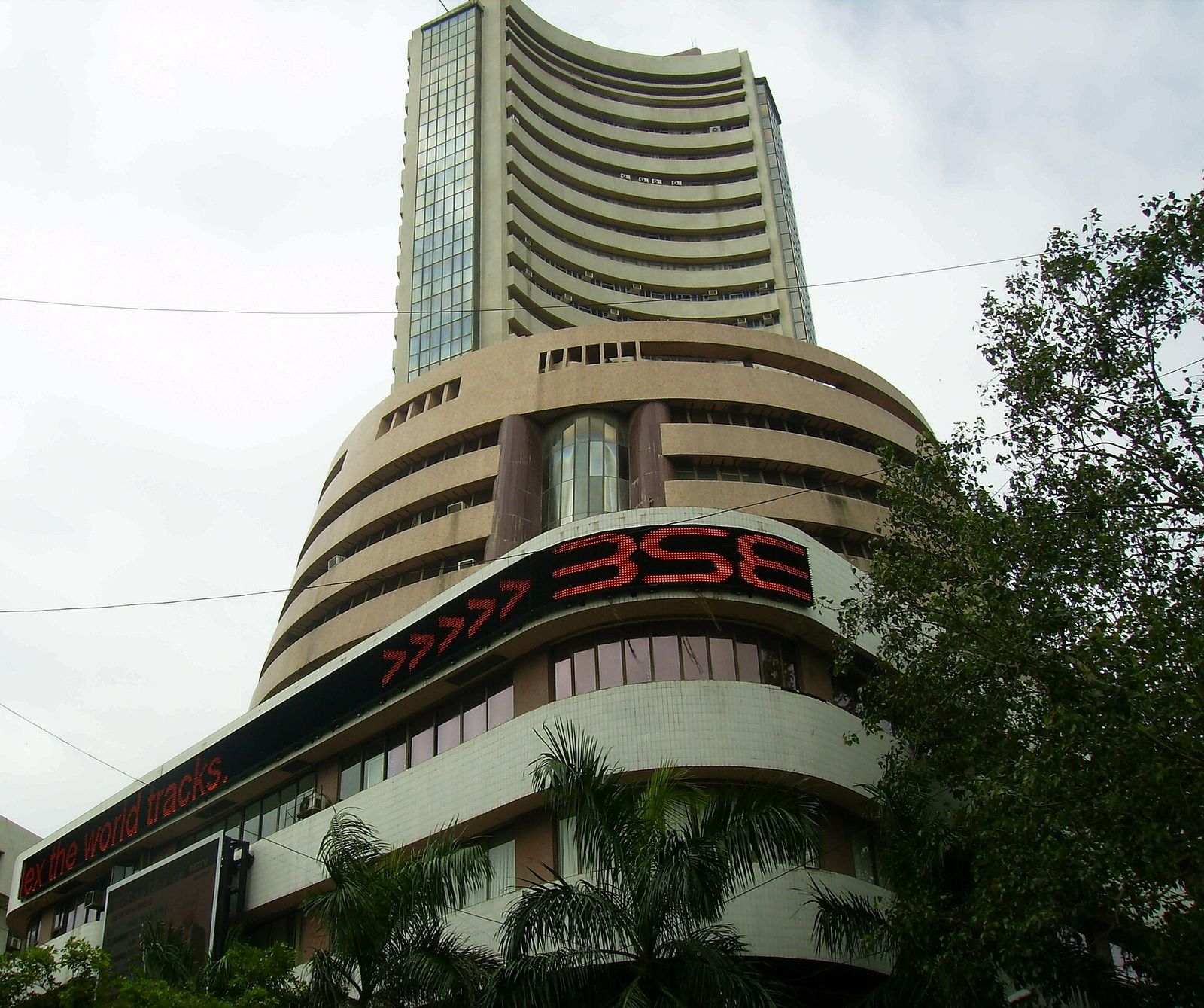
BRSR reporting is the yearly ESG disclosure SEBI requires from India's top 1,000 listed companies, and its checked figures now reach into their supply chains. If you make yarn, fabric, garments or packaging for a listed company, expect questions on energy, emissions, water and waste. This guide gives the dates, the indicators and the data a supplier should have ready.
What BRSR reporting is
BRSR reporting is how India's largest listed companies disclose their environmental, social and governance performance each year. BRSR is short for the Business Responsibility and Sustainability Report.
SEBI introduced it by a circular dated 10 May 2021, after amending regulation 34(2)(f) of its listing rules. Those rules are known as the LODR Regulations. The BRSR replaced the older Business Responsibility Report.
Companies report against the nine principles of India's National Guidelines on Responsible Business Conduct. The report has three parts: general disclosures, management and process disclosures, and performance under each principle.
Each principle has two kinds of question. Essential indicators are mandatory. Leadership indicators are voluntary, though SEBI asks companies to try to report them.
This guide summarises SEBI documents for suppliers. It is not legal advice.
Why an unlisted supplier gets asked for BRSR data
An unlisted supplier never files a BRSR, but its listed customers may need its figures. The route is the value chain disclosure SEBI added in 2023.
A listed company reports BRSR Core indicators for its main upstream and downstream partners. It covers only the part linked to its business with each partner.
So a customer will ask for your factory totals and a fair way to split them. If it has those figures assessed or assured, the checker may also ask to see your records.
More questions come from the leadership indicators in the updated BRSR format. They cover Scope 3 emissions, product life cycle assessments, and the share of partners assessed for environmental impacts.
- Your factoryMeter, fuel and output records
- Listed customerTakes the share linked to its purchases
- Value chain tablePublished with BRSR Core in the annual report
- Assessment or assuranceVoluntary for value chain data from FY 2026-27
BRSR reporting timeline: the dates that matter
BRSR became mandatory in FY 2022-23, and the third-party check on its core figures widens each year until FY 2026-27. The value chain rules came later and are still voluntary.
Filing was voluntary for FY 2021-22. From FY 2023-24, filers use an updated format that contains BRSR Core, under the circular of 12 July 2023.
The circular of 28 March 2025 changed three things. Companies may now choose assessment or assurance for the core figures. The value chain rules moved back by one year. And the partner threshold changed.
SEBI gave two reasons for the delay. Companies and their partners needed time to set up measurement systems, and small businesses needed protection from extra cost.
For a supplier, the practical reading is simple. Requests for FY 2025-26 data may arrive, but no listed company is yet required to send one. Those that want an outside check on value chain data can add it from FY 2026-27.
That circular was the latest one on these rules that we found on sebi.gov.in when writing. Check the site for newer circulars before you plan around a date.
- 10 May 2021SEBI introduces BRSRReplaces the Business Responsibility Report
- FY 2022-23Mandatory for the top 1,000Voluntary in FY 2021-22
- 12 Jul 2023BRSR Core announcedUpdated format from FY 2023-24
- FY 2023-24Core figures checked: top 150
- FY 2024-25Core figures checked: top 250
- 28 Mar 2025Assessment option addedValue chain rules deferred by a year
- FY 2025-26Core figures checked: top 500Top 250 may report value chain data, voluntarily
- FY 2026-27Core figures checked: top 1,000Value chain assessment or assurance, voluntary
BRSR Core: the nine attributes that get checked
BRSR Core is a subset of the full report: key indicators under nine attributes that a third party must assess or assure. Four of the nine are environmental.
Assessment means a third-party check under standards set by the Industry Standards Forum, in consultation with SEBI. Assurance is the other route.
The board must choose a provider with the right expertise. The provider must have no conflict of interest, such as also selling consulting to the company (March 2025 circular).
SEBI calls its data approach a base method. Any change, industry adjustment or estimate must be disclosed.
Two social attributes matter to suppliers too. One asks what share of inputs came from MSMEs, small producers and sources within India. Another asks how many days the company takes to pay its suppliers.
Both figures are published and checked. So a listed customer has a reason to know your MSME status, and its payment days are now visible to investors.
The environmental indicators your factory records feed
Each environmental attribute in BRSR Core maps to a record a factory already keeps. The table shows where each number comes from.
SEBI's BRSR Core format says emissions may be measured under the GHG Protocol corporate standard. For fuel, it names IPCC factors or tests by an accredited lab as the factor source.
For bought electricity, it allows IPCC factors or the supplier's own figures, backed by audited certificates. Energy is reported in joules or multiples of joules.
Every footprint is shown as two intensities. One is per rupee of revenue, adjusted for purchasing power parity. The other is per unit of output, such as tonnes of yarn or pieces of garments.
Water consumption has a strict meaning here. It is water drawn but not returned, such as water lost to evaporation or held in product. If you cannot measure it directly, SEBI allows inlet minus outlet from calibrated meters.
Waste is split into categories, from plastic and e-waste to other non-hazardous waste broken up by material. Each comes with the tonnes recycled, reused or otherwise recovered. For a garment unit, fabric offcuts sent to a recycler belong in the recovered column. See how to reduce textile waste for a tracking sheet.
Who counts as a value chain partner
A value chain partner is a top supplier or customer making up 2% or more of the listed company's purchases or sales by value. The company may stop once it covers 75% of each (March 2025 circular).
Here is the arithmetic with round numbers. A listed apparel company buys ₹1,000 crore of inputs a year. Any supplier selling it ₹20 crore or more crosses the 2% line.
If its largest suppliers already add up to 75% of purchases, the company may stop there. Smaller suppliers may then never be asked.
The company may report upstream and downstream partners separately or together. It must also state the share of purchases and sales its value chain data covers.
The July 2023 rule was different. It took the partners that together made up 75% of purchases or sales, on a comply-or-explain basis from FY 2024-25. Some older guides still describe that version.
What a textile, garment or packaging supplier may be asked for
Expect a questionnaire built around BRSR Core, with a few leadership questions added. Prepare a year of records for the same April-to-March financial year as your customer.
Because checked figures need evidence, keep the bills and logs behind each number. For waste, SEBI now lets companies rely on vendor certificates if they say so (March 2025 circular).
If you are a registered MSME, tell your customer. Its MSME sourcing share is a BRSR Core figure, and your status changes it.
Some mills already hold these numbers for another law. Textile plants named under India's carbon market must track emission intensity per tonne of product. Our guide to the carbon credit trading scheme explains that duty.
Answer in the customer's format where you can. If it sends a spreadsheet, keep your own master file too, so every customer gets the same figures.
- Monthly electricity in kWh: grid, open access and rooftop solar
- Fuel burned by type and quantity
- Steam bought from outside, in tonnes
- Production in tonnes or pieces for the year
- Share of output sold to this customer
- Water drawn, discharged and treated
- Waste by category, with recycler receipts
- Emission factors used, with source and year
- MSME status and location of each unit
- Scope 3: some customers report it as a leadership indicator, and your figures feed it. See how suppliers supply Scope 3 product data.
- Life cycle assessments: another leadership question asks whether the company ran an LCA for any product. A footprint built to ISO 14067 is one input.
- Partner assessments: a third asks what share of partners, by value, were assessed for environmental impacts. You may get a visit or a form.
- Leadership indicator on environmental credits: since FY 2024-25, a leadership indicator asks how many such credits the company and its top ten partners generated or procured.
Worked example: splitting factory data for one customer
Split your factory totals by a stated key, then send the method with the number. Here is the arithmetic with illustrative round numbers.
A knitting and garment unit makes 400 tonnes of product a year. Its Scope 1 and 2 emissions total 1,000 tonnes CO2e. Its intensity is 2.5 tonnes CO2e per tonne of product.
One listed customer takes 120 tonnes, or 30% of output by weight. Allocated by mass, that customer's share is 300 tonnes CO2e.
Mass is not the only fair key. If products differ a lot in process, a machine-hour or metered split is closer to reality. Our guide on allocating factory energy to products compares the options.
Add a one-line note, such as "allocated by mass, FY 2025-26 meter and fuel data". An assessor can then follow your logic.
Factory totals are not product footprints. A buyer asking about one style needs a per-item figure that includes bought fibre and fabric.
Your factory energy shows up in the production stage of that figure. Fibre, packaging and, for a whole-life figure, washing at home sit in other stages.
A product carbon footprint calculator turns the same bills into per-item figures. It keeps your activity data and emission factors in one file.
Common mistakes in supplier BRSR data
Most problems come from mismatched periods, missing evidence and unexplained methods. Each one is easy to fix before the customer's deadline.
- Calendar year instead of financial year: BRSR runs April to March. Recut your data to match.
- Units mixed up: energy goes in joules, emissions in tonnes CO2e. State the unit on every figure.
- Factors with no source: name the source and year of each emission factor, so the sum can be repeated.
- Only one number sent: send the factory total, the allocation key and the customer's share.
- No evidence trail: keep bills, meter logs and recycler receipts for the full year.
- Silent method changes: listed companies must disclose changes in method, so they will ask you about yours.
- Gross figures for solar: rooftop solar you use on site lowers bought electricity. Report the generation and the grid units separately.
- Last year left blank: in the first value chain year, the previous year's figures are optional. After that, customers will expect two years side by side.
What to do next
Start with the records you already have, then add the per-customer and per-product splits. If bills are filed, a first pass takes days, not months.
The same file serves BRSR questionnaires, buyer audits and product footprint requests. Build it once and update it each quarter.
- 1Confirm your statusAsk each listed customer whether you are inside its value chain boundary.
- 2Build the year's data packElectricity, fuel, steam, water, waste and output for April to March.
- 3Pick an allocation keyMass, machine hours or metered energy, and write it down.
- 4Add product figuresRun per-item footprints for your main styles.
- 5Share with the methodSend figures, factors and evidence together.
- Free first look: get a screening estimate from a product link on /analyze.
- Many styles at once: upload your catalogue.
- One product with your own data: start a full footprint.
- Reply to the buyer: see how to answer a customer carbon footprint request.
Sources and further reading
- BRSR introduced (10 May 2021): SEBI circular
- BRSR Core and value chain (12 July 2023): SEBI circular
- Assessment option and revised value chain rules (28 March 2025): SEBI circular, PDF
- BRSR Core format, Annexure I: SEBI, PDF
- Updated BRSR format, Annexure II: SEBI, PDF
Questions
Is BRSR mandatory for all listed companies?
No. SEBI made it mandatory for the top 1,000 listed companies by market capitalisation from FY 2022-23.
What is the difference between BRSR and BRSR Core?
BRSR is the full report against nine principles. BRSR Core is a smaller set of key figures under nine attributes that must be assessed or assured by a third party.
Do unlisted suppliers have to file a BRSR?
No. But listed customers may ask for your data, because the top 250 may report value chain figures voluntarily from FY 2025-26.
Does BRSR require Scope 3 emissions?
Scope 1 and Scope 2 are essential indicators. Scope 3 is a leadership indicator, which is voluntary.
When does BRSR value chain reporting start?
Under SEBI's March 2025 circular, the top 250 listed companies may report it voluntarily from FY 2025-26. Assessment or assurance of it is voluntary from FY 2026-27.
Who checks BRSR Core figures?
A third-party assessment or assurance provider chosen by the company's board. It must not also sell consulting services to the company.
Which suppliers count as value chain partners?
Those making up 2% or more of the listed company's purchases or sales by value. The company may stop once it covers 75% of each.
What unit does BRSR use for energy?
Joules or multiples of joules, with the share from renewable sources and intensity per rupee and per unit of output.
Keep reading
 Methods & standards • MethodScope 3 purchased goods and services: why buyers want your footprintby Ketul Patel • 12 Nov 2026 • 9 min read
 Methods & standards • MethodAllocation in product carbon footprints: sharing factory energyby Ketul Patel • 12 Nov 2026 • 9 min read
 For suppliers • Buyer requestsHow to answer a carbon footprint request from a customerby Ketul Patel • 12 Nov 2026 • 9 min read
 For suppliers • RegulationCarbon credit trading scheme: what India's CCTS means for millsby Ketul Patel • 13 Nov 2026 • 9 min read
 Methods & standards • DataPrimary data share: primary vs secondary data in a product footprintby Ketul Patel • 12 Nov 2026 • 9 min read