How to reduce textile waste in garment and textile factories
By Ketul Patel • • Updated • 9 min read
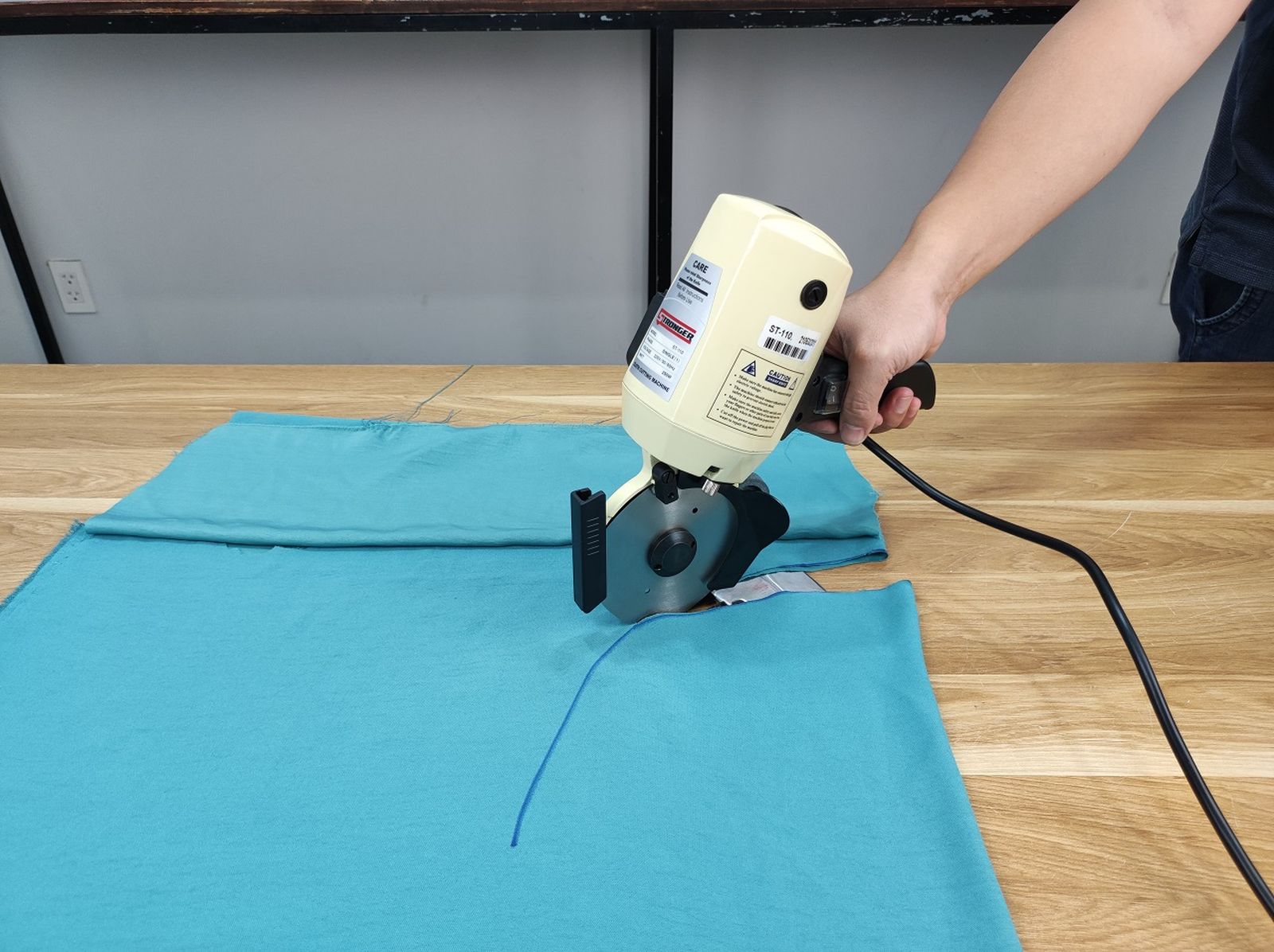
If you want to know how to reduce textile waste in a factory, start where fabric is bought but never sold: the cutting table, rejected pieces, samples and unsold stock. Each kilogram wasted is fabric you paid for and carbon your product carries. This guide covers where waste comes from, eight steps to cut it, a worked carbon example, India's recycling routes, and the EU rules your buyers work under.
Where textile waste comes from in a factory
Most factory textile waste comes from cutting, quality rejects, sampling and overproduction. Each has a different cause, so each needs a different fix.
Before choosing fixes, find out which source is largest in your own unit. If you track cutting loss only as a cost today, start by weighing it.
Waste that never leaves the factory as product is called pre-consumer waste. Waste from worn-out or discarded clothes is post-consumer waste. A factory controls the first kind directly.
Bags, footwear and packaging have the same pattern. Leather and PU offcuts, rejected uppers and misprinted cartons all count, and the same steps apply.
India's textile waste picture in numbers
India already recovers most of its factory textile waste, through a large informal and formal network. A government backgrounder of 12 July 2026 gives the figures.
It puts textile waste managed each year at about 7.8 million tonnes, over 90% of it from domestic factory scrap and used clothing. More than 70% is recovered for recycling, upcycling, downcycling or reuse.
Pre-consumer waste does best: nearly 95% is collected and reused. Almost all spinning waste goes back into production. About 55% of post-consumer waste is kept out of landfill.
Panipat is the main downstream hub. The backgrounder says it handles about 3,500 to 5,250 tonnes of waste a day, and receives a large share of factory scrap from other clusters.
Recovery is not the same as prevention. A recycled offcut still cost you fabric, dyeing energy and cutting time, and its carbon stays in your product's footprint.
So for most Indian units, the question is less whether offcuts are recovered. It is how much fabric you buy that never becomes product, and how much value you get back for it.
How to reduce textile waste: eight steps for factories
The fastest wins come from measuring waste per style, then improving marker efficiency and catching fabric faults before cutting. The steps run in rough order of effort.
Start with one product line, not the whole factory. Prove the method on a few styles, then roll it out.
Most steps cost little beyond staff time. CAD nesting and 3D sampling need software, so price them against the fabric you would save.
Agreeing cut buffers needs the buyer. Bring your reject records to the conversation, so the buffer rests on data rather than habit.
Steps 7 and 8 also prepare you for buyers' traceability requests. The data a digital product passport may need starts with knowing fibre content and where leftovers went.
- 1Measure itWeigh fabric issued and fabric in finished garments for each style.
- 2Track marker efficiencyRecord the share of each marker covered by pattern pieces; set a target per fabric.
- 3Use CAD nestingLet software test layouts and mix sizes on one marker.
- 4Inspect fabric on arrivalCheck rolls for faults and shade before cutting, and return bad fabric.
- 5Sample digitallyUse 3D tools for early fit rounds; sew only final samples.
- 6Agree tighter cut buffersSet the extra-cut percentage with the buyer from your real reject rate.
- 7Sort offcutsSeparate by fibre and colour so recyclers pay more.
- 8Plan for deadstockSell surplus fabric, reuse it for small runs, or agree a take-back route.
Measure first: the fabric balance
A fabric balance compares the fabric you received with the fabric that left in finished goods. The gap is your waste, in kilograms.
Here is an illustration with round numbers. A unit receives 10,000 kg of fabric for an order. The shipped garments weigh 8,200 kg in total. The gap is 1,800 kg, or 18% of fabric received.
Now split the gap. Weigh offcuts at the cutting tables, rejected panels at sewing, and leftover rolls at the end. If offcuts come to 1,300 kg, rejects to 300 kg and leftovers to 200 kg, you know where to start.
Run the balance per style, not per month. Styles differ a lot, and a factory average hides the worst ones.
Use the same scale and the same rules each time. Weigh dry fabric, note moisture-heavy fabrics, and record samples separately from production.
Once the balance runs for a few months, set a target per style family. Review it with the cutting master each week, not only at month end.
- Fabric received10,000 kg
- Cutting1,300 kg offcuts
- Sewing and checks300 kg rejects
- End of order200 kg leftover
- Shipped garments8,200 kg
Why cutting waste raises a product's carbon footprint
Cutting waste raises a product's footprint because you buy, and account for, more fabric than ends up in the garment. A footprint counts the fabric bought, not just the fabric worn.
The method in how to calculate a product carbon footprint uses material bought per unit as activity data. Waste therefore shows up directly in the result.
Here is an illustration. A cotton T-shirt holds 0.20 kg of fabric. Our calculator uses 4.17 kg CO2e per kg of conventional cotton for the fibre.
At 80% fabric use you buy 0.250 kg per shirt, and the wasted 0.050 kg carries about 0.21 kg CO2e. At 85% you buy 0.235 kg, and the waste carries about 0.15 kg CO2e.
The same logic holds for other fibres. For a polyester shirt at the 3.86 kg CO2e per kg our calculator uses, the same 0.05 kg of waste carries about 0.19 kg CO2e.
The saving is about 0.06 kg CO2e and 15 g of fabric per shirt. On 100,000 shirts, that is about 1.5 tonnes of fabric and about 6.1 tonnes CO2e from the fibre alone.
For context, this is the fibre line only. A T-shirt's whole-life footprint also counts production, packaging, transport, washing and disposal, so the waste saving is one part of a larger total.
Selling and recycling offcuts in India
Clean, sorted, single-fibre offcuts sell for more and are easier to recycle than mixed bales. Sorting at the table is the cheapest way to raise their value.
The government backgrounder describes how this works today. At Katran Market in Mongolpuri, Delhi, handlers sort cutting waste from Noida, Gurugram, Manesar, Jaipur and Delhi by colour. The market sends over 10 tonnes a day of sorted waste to recyclers in Panipat.
The same document says Panipat could move to higher-value textile-to-textile recycling with clearer separation of materials. That is exactly what sorting at source provides.
Keep a record of who took your waste and what they did with it. Buyers, auditors and BRSR questionnaires ask for it.
- Separate bins for each main fibre: cotton, polyester, blends
- Separate white and dyed fabric
- Remove labels, zips and elastic where you can
- Label each bale with fibre, colour, weight and style
- Weigh and log every bale before it leaves
- Keep the buyer's name and receipt for each load
India's rules and support for textile waste
India's new waste rules and two MSME schemes touch textile units directly. The same PIB backgrounder summarises them.
The Solid Waste Management Rules, 2026 came into full effect on 1 April 2026, under the Environment (Protection) Act. The backgrounder says they build in circular-economy principles and extended producer responsibility.
Under those rules, industrial units using solid fuel, such as cement plants, must raise their use of refuse-derived fuel from 5% to 15% over six years. That fuel can include textiles, which opens a route for waste that cannot be recycled.
For small units, the MSE-SPICE scheme offers a 25% capital subsidy on eligible plant and machinery for circular-economy projects. MSE-GIFT offers 2% yearly interest subvention on term loans up to ₹2 crore for cleaner technology.
Textile units and clusters must also run effluent treatment plants or common ones, under the Environment Protection Rules, 1986. This is a summary, not legal advice; check the notified text before acting.
EU rules on textile waste that suppliers should know
EU law now makes producers pay for collecting and treating used textiles, and bans large companies from destroying unsold clothes and shoes. These rules apply to companies selling in the EU, but they shape what your buyers ask of you.
The European Commission puts discarded clothing at 5 million tonnes a year in the EU, about 12 kg per person. It says 1% of material in clothing is recycled into new clothing.
Directive (EU) 2018/851 required EU countries to collect textiles separately by 1 January 2025.
Directive (EU) 2025/1892 adds producer responsibility for textiles, textile-related products and footwear. Producers must cover the costs of collection, sorting, preparing for reuse and recycling. Schemes must exist by 17 April 2028.
Under the ESPR, Regulation (EU) 2024/1781, destroying unsold apparel, clothing accessories and footwear is banned from 19 July 2026. Medium-sized firms follow from 19 July 2030; micro and small firms are exempt.
- 1 Jan 2025Separate textile collectionDirective (EU) 2018/851
- 16 Oct 2025Textile producer responsibility in forceDirective (EU) 2025/1892
- 19 Jul 2026Ban on destroying unsold clothes and shoesLarge companies, ESPR
- 17 Jun 2027National laws dueTransposition of 2025/1892
- 17 Apr 2028Producer responsibility schemes in placeAll EU countries
- 17 Apr 2029Rules reach micro-enterprisesUnder 10 staff, up to €2 million
- 19 Jul 2030Destruction ban reaches medium-sized firmsESPR
What EU producer fees mean for an Indian supplier
The new EU fees are paid by the producer that first sells in each country, usually your buyer. But they are set by weight, so your product's weight and design matter to the buyer's bill.
The directive says fees must be based on weight, and where relevant on quantity. They must be adjusted for the ecodesign rules most relevant to waste prevention and treatment, once those are adopted under the ESPR.
EU countries must make producers from another EU country appoint a local representative. They may require the same of producers based outside the EU.
Buyers may ask for fibre content and weight per style to work out their fees. A factory that already keeps a fabric balance can answer quickly.
Common mistakes and a simple tracking template
The most common mistake is counting waste as a percentage only, with no kilograms behind it. Buyers and footprint methods need weights.
Other mistakes are mixing fibres in one bale, cutting a fixed buffer for every style, and forgetting samples in the totals. Each one hides waste you could reduce.
A one-page record per style is enough to start. Review it every month. The styles with the largest gap between fabric bought and fabric shipped show how to reduce textile waste where it counts most.
To see where your largest stages are before you start, get a free screening estimate from a product link on /analyze.
When the template is filled in, upload your styles or build a full footprint. Our guide to answering a customer carbon footprint request shows how to share the results.
A product carbon footprint calculator that reads fabric bought per style will show each waste fix as a lower figure. That gives you evidence to show buyers, not just a claim.
- Style and order: style number, order quantity, pieces cut, pieces shipped.
- Fabric bought: kilograms or metres received, with fibre content.
- Fabric in product: finished garment weight times pieces shipped.
- Marker efficiency: percentage per marker, and the average for the style.
- Rejects: fabric faults, recut panels and failed garments, by count and weight.
- Leftovers: surplus fabric and unshipped pieces, with what happened to them.
- Offcut route: kilograms sold, reused or sent to a recycler, with the partner's name.
Sources and further reading
- India's textile waste figures, rules and schemes: PIB backgrounder, Ministry of Textiles, 12 July 2026
- Separate collection of textiles: Directive (EU) 2018/851, EUR-Lex
- Producer responsibility for textiles: Directive (EU) 2025/1892, EUR-Lex
- Ban on destroying unsold goods (Article 25, Annex VII): Regulation (EU) 2024/1781, EUR-Lex
- EU textile figures: European Commission textiles strategy
Questions
How can garment factories reduce fabric waste?
Measure waste per style, raise marker efficiency with CAD nesting, inspect fabric before cutting, and sample digitally. Then sort offcuts by fibre and colour so recyclers can use them.
What is a good marker efficiency?
It depends on the garment and fabric, so set a target per product type from your own records. Track it per marker and review the ones below your usual figure.
Does reducing cutting waste lower a product's carbon footprint?
Yes. A footprint counts the fabric bought per unit, so less waste means less CO2e. In our cotton T-shirt illustration, moving from 80% to 85% fabric use saves about 0.06 kg CO2e per shirt.
How much textile waste does India recover?
A government backgrounder of July 2026 says more than 70% of about 7.8 million tonnes managed each year is recovered. Nearly 95% of pre-consumer waste is collected and reused.
Where is textile waste recycled in India?
Panipat is the main hub, handling about 3,500 to 5,250 tonnes a day according to the government. Sorting markets such as Katran Market in Delhi feed it.
When does EU extended producer responsibility for textiles start?
Directive (EU) 2025/1892 requires EU countries to have textile producer responsibility schemes by 17 April 2028. Micro-enterprises are covered from 17 April 2029.
Is it illegal to destroy unsold clothes in the EU?
Since 19 July 2026, large companies may not destroy unsold apparel, clothing accessories and footwear under Regulation (EU) 2024/1781. Medium-sized companies follow from 19 July 2030.
Is there government support in India for textile recycling machinery?
The MSE-SPICE scheme offers micro and small enterprises a 25% capital subsidy on eligible machinery for circular-economy projects, according to the Ministry of Textiles.
Keep reading
 Methods & standards • MethodHow to calculate a product carbon footprint, step by stepby Ketul Patel • 12 Nov 2026 • 9 min read
 Methods & standards • RegulationDigital product passport: what suppliers will be asked for, and whenby Ketul Patel • 13 Nov 2026 • 9 min read
 For suppliers • Buyer requestsHow to answer a carbon footprint request from a customerby Ketul Patel • 12 Nov 2026 • 9 min read
 For suppliers • RegulationBRSR reporting: what suppliers to listed companies will be askedby Ketul Patel • 13 Nov 2026 • 9 min read
 Basics • ApparelHow to calculate the carbon footprint of a T-shirt, step by stepby Ketul Patel • 12 Nov 2026 • 9 min read