Scope 3 categories: all 15 explained for suppliers
By Ketul Patel • • Updated • 9 min read
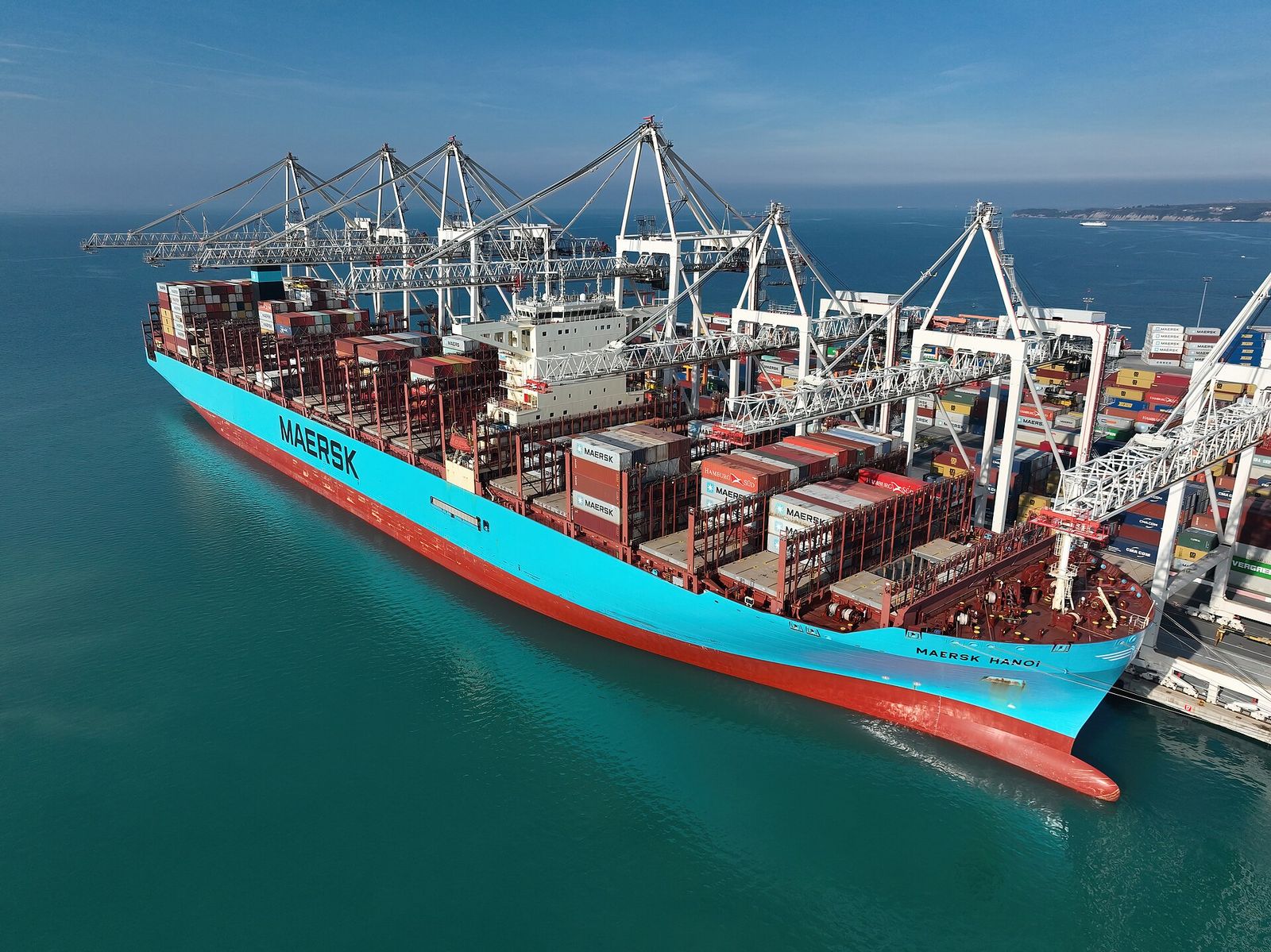
The scope 3 categories are the 15 groups the GHG Protocol uses to sort a company's value-chain emissions, from purchased goods to investments. Categories 1 to 8 are upstream and 9 to 15 are downstream. Below, each one gets a plain explanation, then we show where a supplier's product footprint lands and which categories a factory should count first.
What are the scope 3 categories?
The scope 3 categories are 15 distinct groups of indirect emissions defined in the GHG Protocol Corporate Value Chain (Scope 3) Standard, published in 2011. A company that follows the standard must report its scope 3 emissions category by category.
The categories are designed to be mutually exclusive. For one reporting company, no emission should be counted twice.
Each category has a minimum boundary: the activities that should be counted. A company may leave out an activity inside that boundary only if it discloses and justifies the exclusion.
For a supplier, the list matters in two ways. Your products appear in your buyers' scope 3, and your own suppliers appear in yours.
The standard also fixes what the public report must contain. That includes scope 3 totals by category, a list of included and excluded categories, data sources and methods per category, and the share of each category calculated with supplier data. Biogenic CO2 is reported separately, as the standard's chapter 11 sets out.
Scope 1, 2 and 3 in one table
Scope 3 is every indirect emission in a company's value chain that is not scope 2. The three scopes are mutually exclusive for the reporting company, so nothing is counted in two of them.
Scope 1 is direct emissions from sources the company owns or controls, such as a boiler. Scope 2 is emissions from making the electricity, steam, heat or cooling it buys. See our scope 3 glossary entry for a short definition.
The standard splits scope 3 by money flow. Upstream emissions relate to goods and services the company buys. Downstream emissions relate to what it sells, after control passes to the customer.
Upstream scope 3 categories (1 to 8)
Categories 1 to 8 are upstream: emissions tied to what the company buys. They stop at the point the company receives what it bought.
For a manufacturer, category 1 is almost always the one that matters most, because it holds every material input.
- Category 2 is counted in full in the year of purchase. The standard says companies should not depreciate it over the asset's life the way accounts do.
- Category 3 excludes burning the fuel or making the electricity itself, since those are already in scope 1 or 2. It holds four activities: upstream emissions of purchased fuels, upstream emissions of purchased power, transmission and distribution losses, and power bought for resale by utilities.
- Category 4 also holds outbound freight the company pays for. The standard treats it as a purchased service, so it is upstream.
- Category 1 versus 2 follows the company's own books. If a purchase is treated as a fixed asset, it goes in category 2; otherwise category 1.
Downstream scope 3 categories (9 to 15)
Categories 9 to 15 are downstream: emissions tied to what the company sells. They start once the product is sold and control passes to the customer.
Some of these emissions happen years after the sale. The standard still counts them in the year the product was sold, as expected future emissions.
Categories 13, 14 and 15 mostly matter to landlords, franchisors, banks and investors. Category 10 matters to anyone who sells an intermediate product, such as yarn, fabric or printed board, that another factory processes further.
Minimum boundaries: what each category must count
Each category has a minimum boundary, and there are two kinds. Categories 1, 2 and 3 count the full cradle-to-gate emissions of what was bought.
Most other categories count only the scope 1 and 2 emissions of the partner doing the work. For business travel, that is the fuel burned by the airline, not the making of the aircraft.
That split explains why your product footprint matters so much more than your freight bill. A buyer's category 1 takes your full cradle-to-gate figure, including fibre and fabric. Its category 4 takes only the trucking firm's fuel.
Category 11 has a twist that matters for clothing. The standard requires direct use-phase emissions, from products that burn fuel or use electricity themselves. Indirect use-phase emissions are optional, and the standard names apparel, which needs washing and drying, as an example.
The standard says companies should include indirect use-phase emissions when they are expected to be significant. So a brand may choose to count home washing, but it is not in the minimum boundary.
Which scope 3 category your product footprint feeds
Your product footprint feeds your buyer's category 1, purchased goods and services. When a brand buys your T-shirts, fabric or cartons, the emissions from making them sit there. Our guide to supplier footprints for Scope 3 purchased goods shows how brands use them.
That is why buyers ask for a cradle-to-gate footprint per product, not your company total. The standard says product-level data avoids the need for allocation.
Take a T-shirt. Its raw materials and production are the cradle-to-gate part that lands in the brand's category 1.
Packaging is mostly in the same purchase. Home washing is indirect use, optional in category 11. End of life sits in category 12.
- You sell machines: they land in the buyer's category 2, capital goods.
- The buyer pays the freight from your gate: that trip sits in their category 4.
- You pay the freight: it is in your own category 4, and the buyer's category 9 if they arrange onward delivery.
Scope 3 categories for a garment or packaging factory
For a factory's own inventory, a few categories carry most of the work and several rarely apply. This is our reading of the standard's definitions for a typical supplier; your mix may differ.
Watch the line between categories 4 and 9. Freight you pay for goes in category 4; freight your customer pays for goes in category 9.
Each journey belongs in one place only. Check your shipping terms to see who pays for each leg.
For most garment and packaging factories, category 1 will dwarf the rest, because fibre, fabric and board carry most of the footprint.
- 1. Purchased goods and services: fabric, yarn, trims, dyes, chemicals, cartons and poly bags. Usually the largest; see cotton and polyester factors.
- 2. Capital goods: sewing machines, dyeing machines, boilers and new sheds bought in the year.
- 3. Fuel- and energy-related: upstream emissions of the diesel, gas and grid power you use, and grid losses.
- 4. Upstream transport: inbound fabric freight, and outbound freight you pay for.
- 5. Waste in operations: cutting waste and effluent sludge sent to outside contractors.
- 6 and 7. Business travel and commuting: buyer visits, trade fairs, staff buses.
- 9 to 12. Downstream: customer-paid freight, processing (if you sell fabric or board), use and end of life.
- 8, 13, 14 and 15: leased assets, franchises and investments rarely apply to a factory.
How to decide which scope 3 categories are relevant
A company decides relevance with the standard's own criteria, then counts everything relevant. Table 6.1 of the standard lists them.
One rule helps fabric mills, yarn spinners and board makers. If you sell an intermediate product with many possible end uses, the standard lets you exclude categories 9 to 12 when you cannot estimate them. You must disclose why, and you cannot drop only some of the four.
Whatever you leave out, the standard requires you to list it publicly with a reason.
A sensible first pass uses rough estimates for every category, then spends effort where the numbers are large. The standard's guidance on screening points to the same approach: estimate first, then collect more specific data for the biggest items.
- Size: a large share of expected scope 3
- Influence: you can drive reductions
- Risk: it adds to climate-related risk
- Stakeholders: customers or investors see it as critical
- Outsourcing: work once done in-house
- Sector guidance flags it as significant
Common mistakes when sorting scope 3 categories
Most errors come from counting the same emission twice or putting it in the wrong place. The standard's rules give a clear answer for each.
- Counting your grid power in category 3. The generation emissions are scope 2. Only the upstream fuel and grid losses go in category 3.
- Spreading a new boiler over ten years. Capital goods are counted in full in the year bought, with context in the report if it causes a spike.
- Putting a machine in both category 1 and 2. Follow your own accounting: if it is a fixed asset, it is category 2.
- Adding inbound freight to category 1. Freight from a tier 1 supplier, in vehicles you do not own, is category 4.
- Dropping downstream categories one at a time. An intermediate-product maker may exclude 9 to 12 together, with a reason, not just the awkward ones.
- Netting off offsets. The standard requires category totals reported independent of any offset or allowance trades.
What to do next as a supplier
Start with the number your buyers ask for most: a per-product, cradle-to-gate footprint. It feeds their category 1 and builds the base for your own scope 3 inventory.
You do not need all 15 scope 3 categories on day one. Begin with category 1, then add categories 3 and 4 from fuel bills and freight invoices you already hold.
Keep the files for each category in one place: purchase ledgers for category 1, fixed-asset register for 2, fuel and power bills for 3, freight invoices for 4, and waste contractor receipts for 5. Most of your scope 3 categories can then be updated once a year in a day or two.
- 1List top productsBy volume, with bill of materials and weights
- 2Collect 12 months of energyElectricity and fuel: your scope 1 and 2
- 3Share energy across productsOn a stated allocation basis
- 4Calculate cradle to gatePer product, with data year and sources
- 5Send the packPDF report plus a PACT data file
- Share factory energy using our guide to allocation in product carbon footprints.
- Paste a product link into the free estimate, or run a full product footprint.
- Send the result in the format set out by WBCSD's PACT methodology; our PACT data file guide explains the fields.
- Read how to answer a customer carbon footprint request before you reply.
Sources and further reading
The standards this guide draws on, at their publishers:
- GHG Protocol Corporate Value Chain (Scope 3) Standard: ghgprotocol.org
- Scope 3 Standard, full PDF: ghgprotocol.org
- Technical Guidance for Calculating Scope 3 Emissions: ghgprotocol.org
- PACT Methodology Version 3.0 (WBCSD): carbon-transparency.org
Questions
How many scope 3 categories are there?
There are 15. Categories 1 to 8 are upstream and categories 9 to 15 are downstream, as set out in the GHG Protocol Scope 3 Standard.
What is scope 3 category 1?
Category 1 is purchased goods and services. It covers the cradle-to-gate emissions of everything a company buys that does not belong in categories 2 to 8.
Which scope 3 category do supplier emissions fall into?
A supplier's product emissions usually fall into the buyer's category 1. Equipment falls into category 2, and freight the buyer pays for falls into category 4.
What is the difference between upstream and downstream scope 3?
Upstream emissions relate to goods and services a company buys. Downstream emissions relate to goods and services it sells, after control passes to the customer.
Is washing clothes part of scope 3?
It is indirect use-phase emissions in category 11. The Scope 3 Standard makes it optional, and names apparel as an example, but says it should be included when significant.
Do I have to report all 15 categories?
You report every relevant category. You may exclude an activity only if you disclose and justify it in the public report.
Is scope 3 reporting mandatory?
The GHG Protocol is a voluntary standard. Whether you must report depends on the laws and contracts that apply to you; this is not legal advice.
Where does freight go: category 4 or 9?
Freight the reporting company pays for goes in category 4. Freight for sold products that it does not pay for goes in category 9.
Keep reading
 Methods & standards • MethodScope 3 purchased goods and services: why buyers want your footprintby Ketul Patel • 12 Nov 2026 • 9 min read
 For suppliers • Buyer requestsHow to answer a carbon footprint request from a customerby Ketul Patel • 12 Nov 2026 • 9 min read
 Methods & standards • GHG ProtocolGreenhouse Gas Protocol explained: standards, scopes and productsby Ketul Patel • 13 Nov 2026 • 9 min read
 Methods & standards • StandardsPACT methodology and data file explained for suppliersby Ketul Patel • 12 Nov 2026 • 9 min read
 Basics • BoundariesCradle to gate vs cradle to grave: which boundary does your buyer want?by Ketul Patel • 12 Nov 2026 • 9 min read