Greenwashing examples: real cases regulators acted on, and the lessons
By Ketul Patel • • Updated • 9 min read
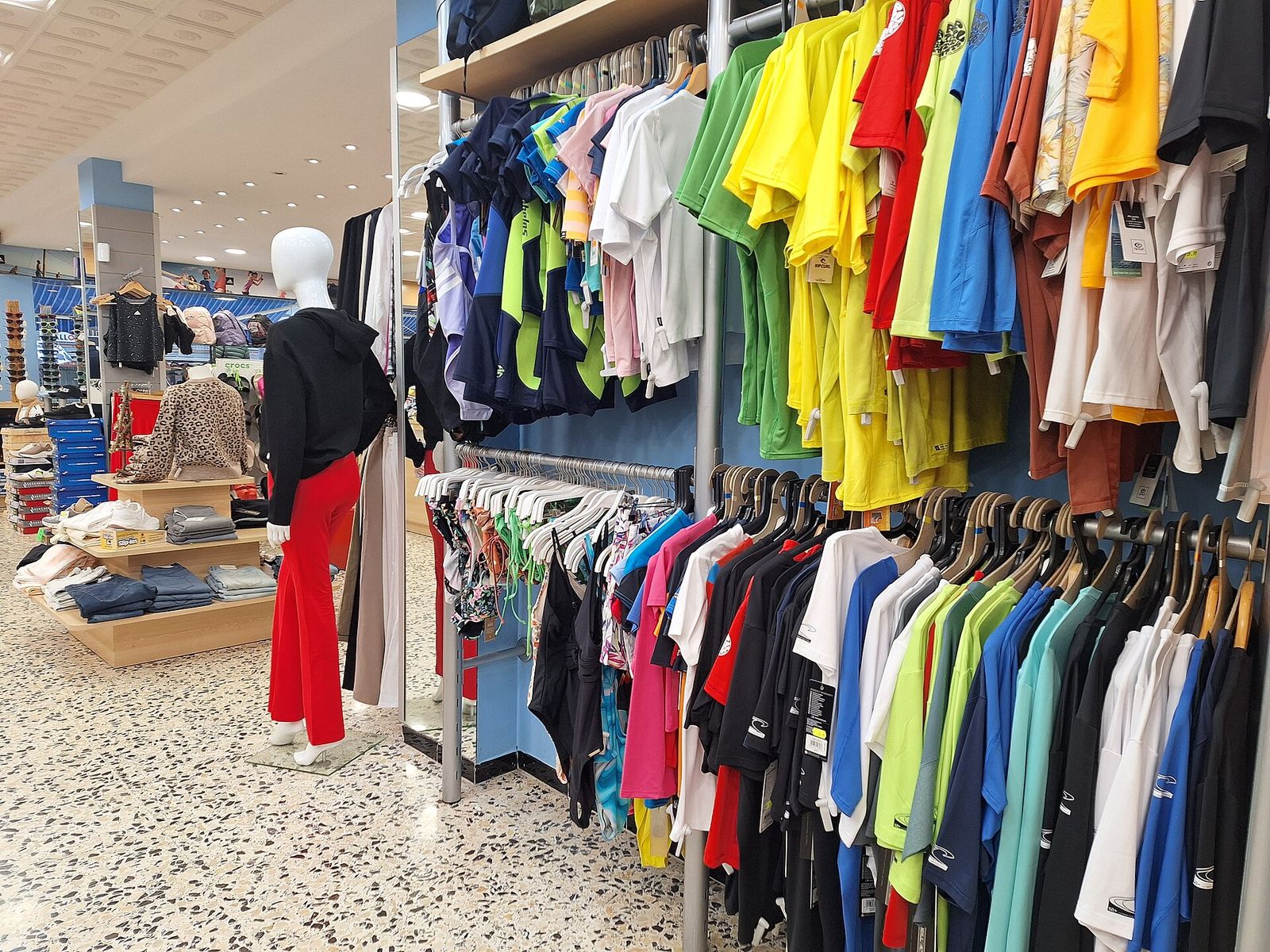
The most useful greenwashing examples are the ones a regulator has ruled on, because you can read exactly what went wrong. This guide covers seven cases from UK and EU enforcers, each described as the regulator recorded it. Then come the four patterns behind them and a worked example with real numbers. It ends with a checklist of the evidence a supplier should hold before any claim goes on a tag.
What regulators count as greenwashing, and who enforces it
Regulators call a claim greenwashing when it is likely to mislead shoppers about a product's environmental impact. Intent does not matter; the impression the claim gives does.
In the UK, the Competition and Markets Authority (CMA) sets out six tests in its code on environmental claims, published on 20 September 2021. Claims must be truthful, clear, complete, fair in any comparison, mindful of the full life cycle, and backed by evidence.
Enforcement is getting sharper. Since April 2025 the CMA can fine a business up to 10% of global turnover for breaking consumer law. The CMA had already warned fashion brands about these powers in its September 2024 guide (CMA, 7 April 2025).
The EU added a blacklist of banned claims that applies from 27 September 2026, under Directive (EU) 2024/825. In India, the Central Consumer Protection Authority issued greenwashing guidelines on 15 October 2024.
This guide describes published decisions. It is not legal advice.
- UK: CMA (consumer law) and the Advertising Standards Authority (ads).
- EU: national consumer authorities, working together in the CPC network with the European Commission.
- India: the Central Consumer Protection Authority, under the Consumer Protection Act, 2019.
Greenwashing examples from fashion: the CMA case on ASOS, Boohoo and Asda
The CMA opened an investigation into ASOS, Boohoo and George at Asda on 29 July 2022. Its case page lists what worried it.
Range names could suggest more benefit than the products had. The CMA named ASOS's "Responsible edit", Boohoo's "Ready for the Future" and "George for Good". Some items in these ranges reportedly held as little as 20% recycled fabric. Others did not meet the retailer's own criteria.
Shoppers were often not told what the fabric was. Statements about fabric schemes could mislead where it was unclear whether the scheme covered the product or the wider business.
On 27 March 2024 all three signed formal undertakings. Six months later, on 18 September 2024, the CMA published a compliance guide for fashion brands and wrote to 17 more brands.
- 10 Jan 2022CMA starts a review of fashion claims
- 29 Jul 2022Investigation into ASOS, Boohoo and Asda opens
- 27 Mar 2024Undertakings signed; case closedSpecific fibre claims, published range criteria, no misleading imagery
- 18 Sep 2024Fashion guide published; letters to 17 brands
- Apr 2025CMA can fine up to 10% of global turnoverNew regime under the Digital Markets, Competition and Consumers Act 2024
- Name the fibre: say "organic" or "recycled", and show the percentage, rather than vague words like "eco" or "responsible".
- Publish range criteria: set minimum rules for any environmental range and apply them to every item.
- Drop suggestive imagery: no leaves, logos or icons that overstate a product's credentials.
- Fix search filters: a "recycled" filter should return only mainly recycled items.
- Back targets with a plan: state the aim, the date and how it will be reached.
- Say what a scheme covers: the product, or the company's wider practices. A safety label such as OEKO-TEX STANDARD 100 covers harmful substances, not climate impact.
An EU example: Zalando's sustainability flags
Online marketplaces face the same scrutiny as brands. The EU's consumer authorities started a coordinated action with Zalando in April 2022.
On 22 February 2024 the Commission announced that Zalando would remove its "sustainability" flag and leaf or tree icons next to products. From 15 April 2024 the icons were to stop appearing.
In their place, Zalando committed to give specific information on the product page, for example the percentage of recycled material. It also agreed to drop the term from its search filters. Its claims must now rest on aspects that matter for the environment.
The lesson for suppliers is direct. A marketplace or brand that loses its icons needs product-level facts to replace them. Those facts, such as recycled share by weight, come from the mill and the factory.
Greenwashing examples from UK advertising rulings
The UK's Advertising Standards Authority (ASA) publishes every ruling online. These four show how often a single word or phrase is the whole problem.
In the Nike ruling, Nike said the shirts held at least 75% recycled material and supplied cradle-to-gate data. The ASA said that data covered only part of the life cycle, so it could not support an absolute claim.
Superdry said 64% of what it bought in its 2024 financial year contained "sustainably sourced" material. Charles Tyrwhitt gave no basis for being "Carbon Neutral". Lufthansa had no current technology to back its poster line.
Offset-based claims: the EU action against airlines
Offset-based claims are a top target for EU enforcers. On 30 April 2024 the Commission and the CPC network wrote to 20 airlines and gave them 30 days to reply.
Their main concern was the idea that paying extra for climate projects or alternative fuels could cancel a flight's CO2. They also flagged absolute use of words such as "green" or "responsible", and CO2 calculators with no stated method.
On 6 November 2025 the Commission said 21 airlines had agreed to change. They include Air France, KLM, Lufthansa, Ryanair and easyJet. All committed to stop saying a specific flight's emissions could be neutralised, offset or directly reduced by customer payments.
The commitments read like a checklist for any sector. Garment makers selling "offset" add-ons or carbon labels can apply them line by line.
- No neutralising: make clear that payments for projects or fuels do not cancel a specific product's emissions.
- Qualify fuel and material terms: use terms such as "sustainable aviation fuel" only with clear explanation.
- No vague language: drop broad environmental words and implied claims.
- Future claims with detail: give timelines, steps and the emissions covered for any net-zero goal.
- Transparent calculators: show how any CO2 figure is worked out.
- Evidence for improvements: hold scientific evidence for any claim of reduced impact.
Four patterns behind most greenwashing examples
Across these seven cases, the same four mistakes keep coming back. Spot them in your own wording and you avoid most of the risk.
- Vague words: "sustainable", "responsible", "eco" or "green" with no stated basis. Regulators read them as absolute claims that need very strong proof.
- Hidden trade-offs: stressing one good feature, such as recycled content, and saying nothing about the rest of the life cycle. The Nike ruling turned on this gap.
- Unbacked labels and ranges: range names, icons or scheme logos whose criteria are weak, unpublished or not applied.
- Offset-based claims: "carbon neutral" or "offset" wording that hides how much is real cuts and how much is bought credits.
Worked example: why a material claim fails the life-cycle test
Take a polyester polo shirt with 200 g of fibre, switched from virgin to recycled. Our calculator uses 3.86 kg CO2e per kg for virgin polyester and 2.21 for recycled polyester, both from UK DESNZ 2025.
That is 0.77 kg CO2e of fibre against 0.44 kg. The switch saves 0.33 kg CO2e, about 43% at the fibre stage.
Now look at the whole garment. The fibre is only one slice of a shirt's whole-life footprint. Spinning, knitting, dyeing, sewing and washing at home are usually the larger part.
So the fibre saving is real but touches one slice of the total. A broad label word implies much more. A narrow, numbered claim stays true: "Recycled fibre saves 0.33 kg CO2e per shirt, fibre stage only."
This is exactly the gap the ASA found in the Nike case. Cradle-to-gate data for recycled polyester was real evidence. It just could not carry a claim about the whole product's life.
How to rewrite a risky claim
Most risky claims can be fixed by swapping a vague word for a fact you can prove. The rewrites below follow what the CMA asked the three retailers to do. Figures in square brackets are placeholders for your own data.
Each rewrite names the material, gives a number and states its limits. None of them claims a whole-life benefit the evidence does not cover.
- Packaging in proportion: a claim about the box is a claim about the box. Do not let the packaging speak for the product inside it.
- Scope words: add "fibre stage only" or "cradle to gate" wherever the figure does not cover the whole life. See cradle to gate vs cradle to grave.
Supplier checklist: evidence to hold before you make a claim
Brands now pass these questions down to the mills and factories that make their products. Before a claim goes on a tech pack, hang tag or product page, check you can answer each point below.
India's CCPA guidelines point the same way. The government release says a claim must state which aspect it covers, such as the product, the process or the packaging. It must also rest on credible certification or reliable scientific evidence.
If a buyer has already sent a request, our guide on how to answer a customer carbon footprint request walks through the reply.
- Exact wording, and the material, process or product it covers
- Recycled or organic share by weight, with batch or scheme documents
- Life-cycle scope stated: fibre stage, cradle to gate or whole life
- A carbon footprint built to a named method, with its sources
- Comparisons with the same function, unit and boundary, baseline named
- Emissions and any credits bought on separate lines
- Proof that a cited scheme covers this product, not just the factory
- A date, and a trigger to recheck when materials or energy change
What to do next
Read the rules that now apply in the EU, then put numbers behind every claim you send a buyer. A footprint with a stated method is the evidence most climate claims need.
For the EU side, our guide to the EU environmental claims rules covers the five new bans and the old-stock guidance.
- Start with a number: get a free screening estimate from a product link at /analyze.
- Go to a full footprint: build an ISO 14067 footprint with a report and data file at /pcf.
- Cover a range: upload a product list to footprint a whole catalogue.
- Check the factors: see where each figure comes from in our emission factor library.
Sources and further reading
The primary sources this guide draws on, read on 13 November 2026:
- CMA case: ASOS, Boohoo and Asda: GOV.UK
- CMA code on environmental claims: GOV.UK
- CMA guide for fashion brands, 18 September 2024: GOV.UK
- CMA consumer enforcement powers, 7 April 2025: GOV.UK
- ASA rulings: Nike, Superdry, Charles Tyrwhitt, Lufthansa
- EU action on airlines: IP/24/2322 and IP/25/2608
- Zalando commitments: European Commission
- India CCPA greenwashing guidelines: PIB
- Directive (EU) 2024/825: EUR-Lex
Questions
What is a well-known example of greenwashing in fashion?
The UK CMA's case on ASOS, Boohoo and George at Asda. It found vague range names and weak range criteria, and in March 2024 the three retailers signed undertakings to change how they present environmental claims.
Is the word "sustainable" greenwashing?
Not by itself, but it is risky. In December 2025 the ASA upheld complaints against Nike and Superdry for using it with no stated basis. Shoppers read it as a whole-life claim.
Is "carbon neutral" a greenwashing claim?
It can be. The ASA upheld a complaint against Charles Tyrwhitt in 2023 because the ad gave no basis. In the EU, product neutrality claims that rest on offsetting are banned from 27 September 2026.
What are the main types of greenwashing?
Regulators use no single fixed list. Their decisions keep returning to four patterns: vague words, hidden trade-offs, unbacked labels or ranges, and claims that rely on offsets.
Can the CMA fine a company for greenwashing?
Yes. Since April 2025 the CMA can fine a business up to 10% of global turnover for breaking consumer law. It warned fashion brands about these powers in its September 2024 guide.
Does India regulate greenwashing?
Yes. The Central Consumer Protection Authority issued guidelines on greenwashing and misleading environmental claims on 15 October 2024. They require evidence for claims and a clear statement of which aspect a claim covers.
What did Zalando change after the EU action?
It removed its sustainability flag and leaf or tree icons from 15 April 2024. It now gives specific facts on the product page, such as the share of recycled material.
How can a supplier avoid greenwashing?
Make claims specific and limited to what you can prove. Name the material and percentage, state the life-cycle scope, keep the evidence on file, and keep emissions separate from any credits.
Keep reading
 Basics • RegulationEU environmental claims rules: what changed on 27 September 2026by Ketul Patel • 12 Nov 2026 • 9 min read
 For suppliers • Buyer requestsHow to answer a carbon footprint request from a customerby Ketul Patel • 12 Nov 2026 • 9 min read
 Basics • BoundariesCradle to gate vs cradle to grave: which boundary does your buyer want?by Ketul Patel • 12 Nov 2026 • 9 min read
 Basics • MaterialsWhat is recycled polyester? rPET, how it is made and what it savesby Ketul Patel • 13 Nov 2026 • 9 min read