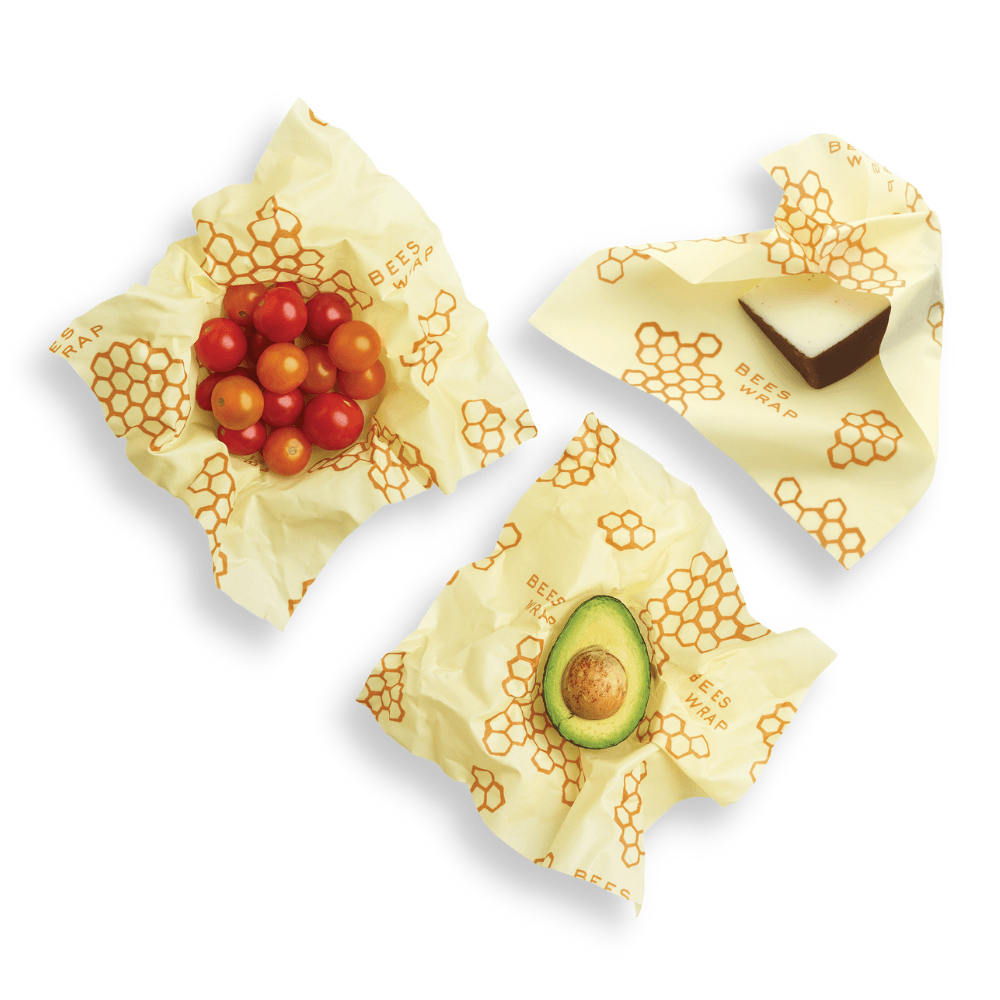
Medium Wrap 3 Pack
Listing says “Made with organic cotton, beeswax, organic plant oil, and tree resin.”
per unit, whole life · sold in India · made in India
Change anything below and the footprint recalculates. What you change is marked “Stated”. Nothing here is saved.
| Part | Material (kg CO₂e per kg) | Share % | Mass | Source |
|---|---|---|---|---|
| Material | Family word, assumption applied ⓘ | 50 g | Estimated Primary source | |
| Material | Named material ⓘ | 50 g | Estimated Contested | |
| Material | Named material | 50 g | Estimated Primary source |
In everyday terms, about the same as driving 3 km in a petrol car, 67 smartphone charges, or 0 tree-years of absorption.
How this was calculated
Everything behind the figure, for auditors and the curious. Built to the requirements of ISO 14040/44, ISO 14067 and PACT v3.
Standards checkISO 14040/44, ISO 14067 and PACT v3, requirement by requirement
All 30 requirements, with clauses
| Requirement | ISO 14040/44 | ISO 14067 | PACT v3 |
|---|---|---|---|
| The study's purpose is written down | Met §4.2.2 | Met §6.3.1 | — |
| No public claim that one product beats another | Met §4.2.2; Amd 1 Annex C | Met §Annex A, Annex B | — |
| The unit is clear, and a partial footprint is labelled as such | Met §4.2.3.2 | Met §6.3.3 | Met §3.2.4 |
| The system boundary is described | Met §4.2.3.3 | Met §6.3.4, 7.3 b | Met §3.2.3 |
| The time period is stated and justified | — | Met §6.3.6 | Met §3.2.3 |
| Product category rules are used where they exist | — | Met §6.2 | Met §3.1.2 |
| Anything left out is small, estimated and reported | Met §4.2.3.3.3 | Met §6.3.4.3 | Met §3.3.1.2 |
| The data is checked for consistency | Met §4.3.2–4.3.3 | Met §6.4.3 | — |
| Own processes use measured data, or say why not | — | Not applicable §6.3.5 | Not applicable §4.1.3 |
| Every database value is referenced and fit for purpose 4.1 % of emissions use MFP screening proxies (Beeswax (mass allocation with honey, Italian farm)): values compiled from cited literature, not a maintained published dataset. Fix: Replace them with a published database value or the supplier's own figure. | Not met §4.3.2 | Not met §6.3.5 | Not met §4.1.3.2 |
| Shared factory burdens are split by the standard rules | Not applicable §4.3.4 | Not applicable §6.4.6 | Not applicable §3.3.1.4 |
| Recycling is counted with the cut-off method | Met §4.3.4.3 | Met §6.4.6.3 | Met §3.3.2.2 |
| Electricity covers its whole life cycle | Not applicable §4.3.2–4.3.3 | Not applicable §6.4.9.4.1 | Not applicable §3.3.2.3 |
| Electricity follows the market-based rules | — | Not applicable §6.4.9.4.4 | Not applicable §3.3.2.3, Box 7 |
| Land-use change is counted and shown separately dLUC included but not separable in the factor for m3. Fix: Use a factor with a separate dLUC result, or supply material.land_use_change with its value, source, year and whether the material factor already includes it. A documented no-LUC statement can resolve an unknown coverage gap. | — | Not met §6.4.9.5 | Not met §3.3.2.4 |
| Biogenic carbon is counted in and out | — | Met §6.4.9.2, 6.4.9.3, 6.5.2 | Met §3.3.2.4 |
| Air freight is shown separately, without radiative forcing | — | Not applicable §6.4.9.7 | Not applicable §3.3.2.1 |
| No offsets or avoided emissions | — | Met §6.3.4.1 | Met §3.3.2.2 |
| Latest IPCC warming factors (AR6, 100 years) 85.4 % of cradle-to-gate emissions use AR4, AR5 factors; PACT allows only the latest IPCC report once its grace year has passed. Fix: Replace these factors with AR6-characterised data. | Justified §4.4.2 | Justified §6.5.1 | Not met §3.2.2 |
| Fossil and biogenic methane are kept apart | — | Met §6.5.2 | — |
| Key choices are stress-tested | Met §4.5.3.3 | Met §6.4.5, 6.6 | — |
| Uncertainty is assessed | — | Met §6.6 | — |
| Data quality is scored | Met §4.2.3.6 | Met §6.3.5 | Met §4.2.2, 4.2.3 |
| Limitations are stated | Met §4.5.4 | Met §6.6, Annex A | — |
| Results are broken down the required way | — | Met §7.2 | Met §3.3.1, data model |
| The study report contains every required item | Met §5.2 | Met §7.3 | — |
| The PACT data file is complete Missing or invalid: companyIds, productIds. Fix: Add company and product identifiers (URNs such as urn:mfp:company:acme), the reference period and a PACT unit. | — | — | Not met §6.1; Tech Specs v3.0.3 |
| The primary data share is reported | — | — | Met §4.2.2 |
| Independent critical review No critical review recorded. Fix: Commission an ISO 14071 critical review before any public communication; a panel review is mandatory for public comparisons. | Needs reviewer §6 | Needs reviewer §8 | — |
| Third-party verification of the calculation model The MFP footprint calculation model has not yet been verified by a third party. Fix: Commission limited-assurance verification of the calculation model (PACT v3 §5.3.3, Tables 14–15). | — | — | Needs reviewer §5.3.3 |
These standards apply to studies. This checklist reports the implemented checks; it is not certification or a substitute for independent review. “Needs reviewer” items (critical review, verification of the calculation model) can only be closed by an independent third party.
Assumptions and defaults18 entries, 5 warnings
- This listing is a pack or set of several items. The footprint is for the listing as sold, using 0.15 kg, a typical weight for one item: check that this weight covers every item in the pack.
- m1: Resin (epoxy) has no verified carbon content, so its biogenic carbon is missing from the biogenic balance.
- m2: Beeswax has no verified carbon content, so its biogenic carbon is missing from the biogenic balance.
- Factor te26_cotton_org_in includes land-use change that cannot be separated; LUC is reported inside fossil GHG for this line.
- Temporal scores for desnz_2025, textile_exchange_2026 use the edition year; their underlying data are older, so those temporal scores may be better than the data deserve.
Assumptions register · 18 entries
- Screening mode: this listing gives no primary data, so every input below that is not a stated material or weight is a named screening default. The result is not PACT-conformant (primary data share 0 %).
- Product mass 0.15 kg is a category typical value for "packaging", not a measured weight.
- Country of manufacture not stated in the listing; India assumed.
- m1: material matched from "resin" (family, MEDIUM confidence): resin of unstated type is modelled as epoxy resin.
- m1: material share 33 % is estimated from the listing text.
- m2: Beeswax is not in the published factor library; screening proxy proxy_beeswax (CONTESTED, technological score 4) used.
- m2: material matched from "beeswax" (specific, HIGH confidence): beeswax is modelled with one Italian apiary study (mass allocation with honey), a contested stand-in.
- m2: material share 33 % is estimated from the listing text.
- m3: material share 33 % is estimated from the listing text.
- Inbound transport of materials to the factory is left out of the total, because supplier locations are unknown; its likely size is estimated and reported under the cut-off rule below.
- Distribution route is a screening default (1,000 km road), carrying product plus packaging.
- Cut-off rule: processes are excluded only where no verified data exists, and each exclusion is estimated where possible and reported (ISO 14044 §4.2.3.3.3). Inbound transport is estimated at 0.0094 kg CO₂e.
- Carbon content of cellulose computed from repeat-unit stoichiometry (0.4445 kgC/kg), pure polymer basis (additives, moisture and finishes ignored).
- Secondary (library) factors are scored at least 3 on technology: PACT v3 Table 12 reserves scores 1-2 for primary data.
- Use-phase scenario: No energy-using use phase for packaging.
- End-of-life route shares: MFP screening scenario for India, not PEFCR: textiles and leather goods 80 % landfill / dump, 5 % burning; plastics 60 % / 10 %; paper 40 % / 5 %; metals and glass 50 % landfill; the rest recovered (cut-off). Anchored on CPCB Annual Report on Solid Waste Management 2021-22 (24 % landfilled, 22 % unaccounted).
- Aggregated secondary factors are used as published in their own GWP basis (AR4, AR5); only gas-split fuel factors and direct gas emissions are characterised with AR6. Residual inconsistency is typically a few percent for CO2-dominated factors.
- Sources quoted as published figures (not open-licensed datasets): plasticseurope_epoxy_2005, screening_proxy, textile_exchange_2026. Replace with licensed or supplier data before external or comparative claims.
SensitivityThe figure with other published choices
The footprint recalculated with each alternative choice: other published factors, the other allocation method, the grid mix instead of a green-power contract, and the use profile at its uncertainty bounds. A large change shows where better data pays off first.
| Line | Choice tested | Baseline | Alternative | Δ kg CO₂e | Δ % |
|---|---|---|---|---|---|
| Cotton, organic | Emission factor | Organic cotton lint, India | Organic cotton fibre Textile Exchange (2014) LCA of Organic Cotton Fiber, summary (PE International) | -0.024 | -4.5% |
| Cotton, organic | Emission factor | Organic cotton lint, India | Organic cotton fibre ifeu (2022) Environmental footprints of cotton and cotton fibres | +0.042 | +7.8% |
Every line of the calculation13 lines: activity × factor, with sources
Footprint = Σ activity × emission factor
Every line: how much (activity) × how much CO₂e per unit (factor), with its source. Source labels
| Stage | Line | Activity | × Factor | = kg CO₂e | DQR | Source |
|---|---|---|---|---|---|---|
| Raw materials | Resin (epoxy) epoxy_resin (virgin) | 0.050 kg | 8.1 kg/kg | 0.405 | 3/5/5 Very low · +330% | Primary source Boustead I., 'Eco-profiles of the European Plastics Industry: Liquid Epoxy Resins', report for PlasticsEurope, data last calculated March 2005 (PlasticsEurope eco-profile archive, liquid epoxy resin package) database · 2005 |
| Raw materials | Beeswax beeswax (virgin) | 0.050 kg | 0.44 kg/kg | 0.022 | 4/5/5 Very low · +534% | Contested Pignagnoli A., Pignedoli S., Carpana E., Costa C., Dal Pra A. (2023) Greenhouse Gas (GHG) Emissions from Honey Production: Two-Year Survey in Italian Beekeeping Farms. Animals 13(4):766. doi:10.3390/ani13040766 screening proxy · proxies.1 |
| Raw materials | Cotton, organic cotton_fibre_organic (virgin) | 0.050 kg | 1.46 kg/kg | 0.073 | 3/1/1 High · +266% | Primary source Textile Exchange (2026) LCA for Cotton, technical report, Table 5-2 / Annex F database · Mar 2026 |
| Distribution | Road to customer (India) HGV (all diesel), all HGVs, average laden, 1000 km | 0.150 t·km | 0.1252 kg/t·km | 0.019 | 3/5/1 Medium · +309% | Pin to primary UK DESNZ GHG conversion factors 2025, Freighting goods + WTT delivery vehicles database · 2025 (flat file) |
| End of life | Resin (epoxy) to recycling (cut-off: collection only) | 0.015 kg | 0.004686 kg/kg | 0.000 | 3/5/1 Medium · +271% | Pin to primary UK DESNZ GHG conversion factors 2025, Waste disposal (open/closed loop, combustion) database · 2025 (flat file) |
| End of life | Resin (epoxy) to incineration: collection | 0.005 kg | 0.004686 kg/kg | 0.000 | 3/5/1 Medium · +271% | Pin to primary UK DESNZ GHG conversion factors 2025, Waste disposal (open/closed loop, combustion) database · 2025 (flat file) |
| End of life | Resin (epoxy) to landfill | 0.030 kg | 0.008983 kg/kg | 0.000 | 3/5/1 Medium · +271% | Pin to primary UK DESNZ GHG conversion factors 2025, Waste disposal database · 2025 (flat file) |
| End of life | Beeswax to recycling (cut-off: collection only) | 0.015 kg | 0.004686 kg/kg | 0.000 | 3/5/1 Medium · +271% | Pin to primary UK DESNZ GHG conversion factors 2025, Waste disposal (open/closed loop, combustion) database · 2025 (flat file) |
| End of life | Beeswax to incineration: collection | 0.005 kg | 0.004686 kg/kg | 0.000 | 3/5/1 Medium · +271% | Pin to primary UK DESNZ GHG conversion factors 2025, Waste disposal (open/closed loop, combustion) database · 2025 (flat file) |
| End of life | Beeswax to landfill | 0.030 kg | 0.008983 kg/kg | 0.000 | 3/5/1 Medium · +271% | Pin to primary UK DESNZ GHG conversion factors 2025, Waste disposal database · 2025 (flat file) |
| End of life | Cotton, organic to recycling (cut-off: collection only) | 0.007 kg | 0.004686 kg/kg | 0.000 | 3/5/1 Medium · +271% | Pin to primary UK DESNZ GHG conversion factors 2025, Waste disposal (open/closed loop, combustion) database · 2025 (flat file) |
| End of life | Cotton, organic to incineration: collection | 0.002 kg | 0.004686 kg/kg | 0.000 | 3/5/1 Medium · +271% | Pin to primary UK DESNZ GHG conversion factors 2025, Waste disposal (open/closed loop, combustion) database · 2025 (flat file) |
| End of life | Cotton, organic to landfill biogenic non-CO₂ (landfill methane) | 0.040 kg | 0.4968 kg/kg | 0.020 | 3/5/1 Medium · +271% | Pin to primary UK DESNZ GHG conversion factors 2025, Waste disposal database · 2025 (flat file) |
| Total, excluding biogenic uptake | 0.539 |
ISO 14067 study reportSeparately reported values and report contents
ISO 14067 study report · Carbon footprint (cradle-to-grave, functional unit)
| Footprint per one packaging delivered and used to the end of its life, sold in India (ISO 14067, incl. biogenic −1/+1) | 0.4616 kg CO₂e |
| Net fossil GHG | 0.5191 kg CO₂e |
| Biogenic CO₂ emissions | 0.0041 kg CO₂ |
| Biogenic CO₂ removals | -0.0813 kg CO₂ |
| Biogenic CH₄ (as CO₂e) | 0.0199 kg CO₂e |
| Direct land-use change | 0.0000 kg CO₂e |
| Aircraft (no radiative forcing) | 0.0000 kg CO₂e |
| Biogenic carbon content | 0.0222 kg C |
| Outbound logistics (reported separately) | 0.0188 kg CO₂e |
| Raw materials | 0.4995 kg · 92.69% |
| Production | 0.0000 kg · 0% |
| Inbound transport | 0.0000 kg · 0% |
| Packaging | 0.0000 kg · 0% |
| Distribution | 0.0188 kg · 3.49% |
| Use phase | 0.0000 kg · 0% |
| End of life | 0.0206 kg · 3.83% |
| Goal: application, reasons, audience, comparative assertion §6.3.1 / 14044 4.2.2 | Screening carbon footprint shown on the Made for Planet catalogue so brands and buyers can see where a product's emissions come from. Reasons: No company data is available for this listing; a transparent estimate from the listing and published factors shows the likely size and the main stages. Audience: Brands and buyers (business-to-business). The estimate is also displayed on madeforplanet.com, labelled as a screening estimate; it is not an environmental claim the brand may use in marketing. Public comparative assertion: no. |
| Functional or declared unit and reference flow §7.3 a | Functional unit: one packaging delivered and used to the end of its life, sold in India; reference flow 0.15 kg of product. |
| System boundary §7.3 b | cradle to grave. Screening: materials, processing energy, packaging, distribution, use and end of life. Capital goods are excluded, as is usual for attributional product footprints. Stages modelled: raw_materials, distribution, end_of_life. |
| Significant unit processes §7.3 c | epoxy_resin (virgin) (75.08 %); cotton_fibre_organic (virgin) (13.53 %) |
| Data sources §7.3 d | Eco-profile liquid epoxy resin 2005; LCA for Cotton, technical report Mar 2026; UK DESNZ Greenhouse gas reporting: conversion factors 2025 2025 (flat file); MFP screening proxies proxies.1 |
| Greenhouse gases considered §7.3 e | CO₂, CH₄ (fossil and biogenic), N₂O and refrigerant gases (HFCs, SF₆, NF₃) where present; secondary factors cover the gases their publishers include. |
| Characterisation factors §7.3 f | IPCC AR6 GWP100 with climate-carbon feedbacks; secondary factors in their published basis where no AR6 version exists (see gwp check). |
| Cut-off criteria and exclusions §7.3 g, o | Inbound transport of materials to the factory: 0.009382 kg CO₂e (screening estimate: 0.150 kg of materials × 500 km by average lorry (UK DESNZ GHG conversion factors 2025, Freighting goods + WTT delivery vehicles); supplier locations are not known) |
| Allocation procedures §7.3 h | No multi-output processes. Recycling: cut-off. |
| Timing of emissions §7.3 i, 6.4.8 | All emissions and removals counted as at the start of the assessment period; no delayed-emission weighting. |
| Data description and quality §7.3 j | PACT Table 12 DQR: technological 3.04, geographical 4.46, temporal 4.17; per-line scores, confidence and 95 % uncertainty in the inventory. |
| Sensitivity and uncertainty §7.3 k | 2 sensitivity case(s); lognormal Monte Carlo on pedigree uncertainty. |
| Electricity treatment §7.3 l | No electricity in scope. |
| Interpretation, limitations §7.3 m, Annex A | Climate change only: other impacts (water, land, toxicity, biodiversity) are not assessed, so a lower footprint does not mean a lower environmental impact overall. Secondary factors limit accuracy as shown by the data-quality scores. |
| Value choices §7.3 n | Cut-off for recycling (PACT); economic allocation only above a 5× value ratio; conservative factor where published values disagree (see sensitivity). |
| Scope changes and exclusions §7.3 o | None. |
| Life-cycle stages, use and end-of-life scenarios §7.3 p, 6.3.7, 6.3.8 | Use-phase scenario: No energy-using use phase for packaging. End-of-life route shares: MFP screening scenario for India, not PEFCR: textiles and leather goods 80 % landfill / dump, 5 % burning; plastics 60 % / 10 %; paper 40 % / 5 %; metals and glass 50 % landfill; the rest recovered (cut-off). Anchored on CPCB Annual Report on Solid Waste Management 2021-22 (24 % landfilled, 22 % unaccounted). |
| Influence of alternative scenarios §7.3 q | factor_choice m3: -4.5 %; factor_choice m3: 7.8 % |
| Period the footprint represents §7.3 r, 6.3.6 | 2026-01-01 to 2026-12-31: current production as represented by the factor library (each factor's own data year is scored in the temporal data quality) |
| Product category rules §7.3 s, 6.2 | No product category rules conforming to ISO/TS 14027 are known for this product category; MFP screening rules are applied and disclosed. |
| Performance tracking §7.3 t, 6.4.7 | Not a performance-tracking study. |
ISO 14067 counts biogenic removals (−1) and emissions (+1) in the carbon footprint; the PACT headline excludes biogenic uptake. Both are shown.
PACT v3 data and biogenic carbonData-exchange values and a downloadable file
PACT v3 data model (cradle-to-gate) and biogenic carbon balance
Download PACT v3.0.3 JSON ProductFootprint in the Technical Specifications v3.0.3 format (decimals as strings). Check the conformance panel before sending it.
| Footprint excl. biogenic uptake | 0.4995 kg CO₂e |
| Footprint incl. biogenic uptake | 0.4182 kg CO₂e |
| Fossil GHG emissions | 0.4995 kg CO₂e |
| Land-use change GHG | — |
| Biogenic non-CO₂ | 0.0000 kg CO₂e |
| Biogenic CO₂ uptake | -0.0813 kg CO₂ |
| Fossil carbon content | 0.0000 kg C |
| Biogenic carbon content | 0.0222 kg C |
| Aircraft GHG (no RF) | 0.0000 kg CO₂e |
| Packaging GHG | 0.0000 kg CO₂e |
| Exempted emissions | 1.8440 % |
| Primary data share | 0.0000 % |
| IPCC characterisation | AR6, AR4, AR5 |
| Biogenic CO₂ uptake | -0.0814 kg CO₂ |
| Biogenic CO₂ emitted | 0.0041 kg CO₂ |
| Biogenic C stored in landfill | 0.0178 kg C |
| Biogenic C exported to recycling | 0.0033 kg C |
| Biogenic C in product | 0.0222 kg C |
| Engine / factor library | 1.2.0 / 2026.11-mfp.8 |